The Hook: The Ultimate Pastalaya Recipe
It is a universal culinary crisis. You are craving the deep, smoky heat of a traditional Jambalaya—that specific alchemy of spice and meat but your soul is demanding the carbo-loaded embrace of a pasta dish. Usually, you have to choose. Not today.
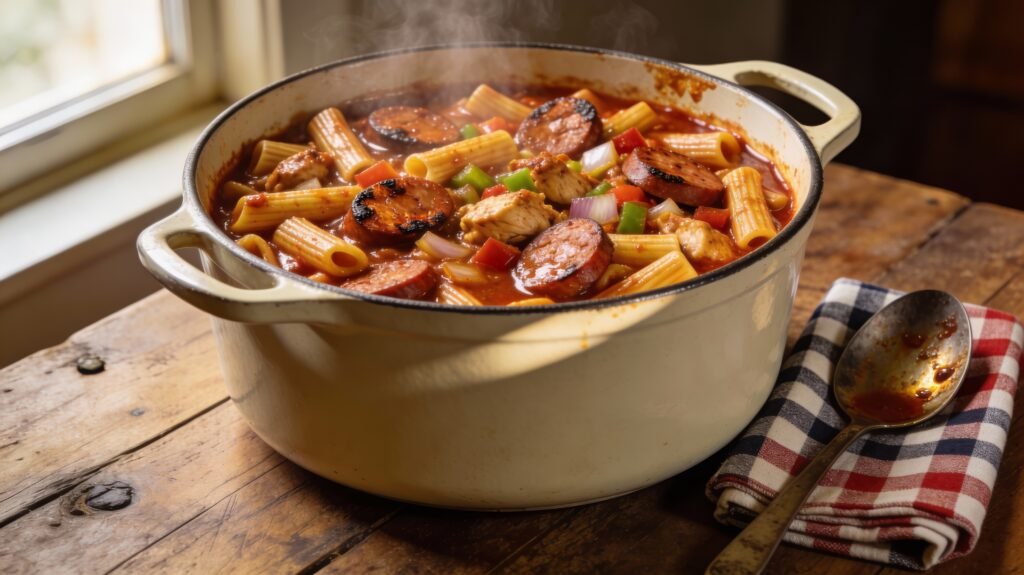
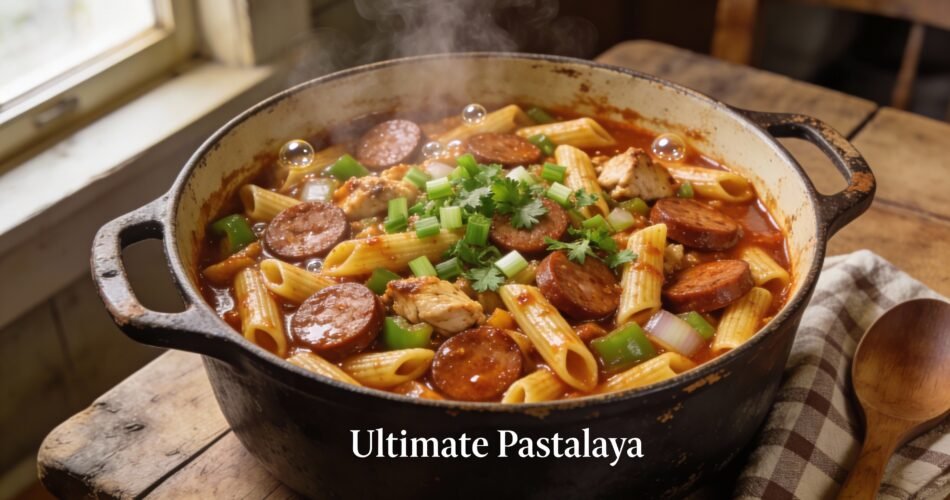
The ultimate one-pot comfort meal: Cajun Pastalaya loaded with chicken and Andouille sausage
Maybe you are staring down a hungry crowd on game day. You want to impress, but the mental image of scrubbing three different pans and a rice cooker makes ordering a mediocre pizza look dangerously appealing. We reject that compromise.
Enter Pastalaya.
It takes everything you adore about the classic Louisiana rice dish—the aggressive spices, the savory meats, the aromatic vegetables—and swaps the grain for tender noodles. This is the perfect marriage of Italian comfort and Louisiana heat. It is bold, it is unapologetic, and best of all? It comes together in a single pot.
The Context: What is Pastalaya?
Think of pastalaya as Jambalaya’s rebellious cousin—the one who shows up to the family reunion in a leather jacket.
While traditional Cajun cuisine relies heavily on rice as the primary starch, pastalaya recipes pivot to pasta. It’s a brilliant swap. The noodles act as a sponge, soaking up that incredible “pot liquor”—the rich, seasoned broth created by rendering down the meats and vegetables.
It is the definition of a “kitchen sink” meal: hearty, spicy, and incredibly efficient. But the real magic lies in the chemistry. As the pasta cooks directly in the sauce, it releases starch. This naturally thickens the liquid, creating a luxurious, creamy texture without a single drop of heavy cream. It’s chemistry you can taste.
The Setup: Ingredients for the Perfect Pastalaya
To nail this dish, you cannot freestyle the foundation. The flavor profile rests entirely on the “Holy Trinity” of Cajun cooking. Without it, you’re just making spicy noodles.
Here is the arsenal you will need to get it right:
- The Proteins: You want flavor, not dryness. Use 1 lb of chicken thighs (diced) for moisture retention, and 1 lb of Andouille sausage (sliced) for that signature smoky punch.
- The Trinity: The non-negotiables. 1 onion, 1 bell pepper, and 2 celery stalks, all diced.
- The Aromatics: 4 cloves of garlic, minced. Because garlic is a food group.
- The Liquid: 4 cups of chicken broth. Pro-move: Go for low-sodium so you can control the salt levels later.
- The Star: 1 lb of uncooked pasta. You want short, sturdy shapes here—bow tie or penne are ideal for trapping sauce.
- The Heat: 2 tbsp of Cajun or Creole seasoning, 1 tsp of paprika, and a dash of cayenne if you’re feeling brave.
- The Extras: 1 can of diced tomatoes (optional, depending on your allegiance to Creole vs. Cajun styles) and green onions for the final garnish.
Here are the final sections of the “Ultimate Pastalaya Recipe“ blog post, crafted with SPARKLE’s signature precision and narrative flair.
The Execution: Step-by-Step Recipe
Follow this method religiously. The difference between a culinary triumph and a pot of mush lies in the details.
- Brown the Meats
Heat a large Dutch oven or heavy-bottomed pot over medium-high heat with a splash of oil. Add the sliced Andouille sausage first. You aren’t just cooking it; you are rendering out the fat. This liquid gold is what you’ll cook the rest of the meal in. Once browned, remove it. Add the chicken to the hot fat, season lightly, sear until golden, and set aside with the sausage.
- Sauté the Vegetables
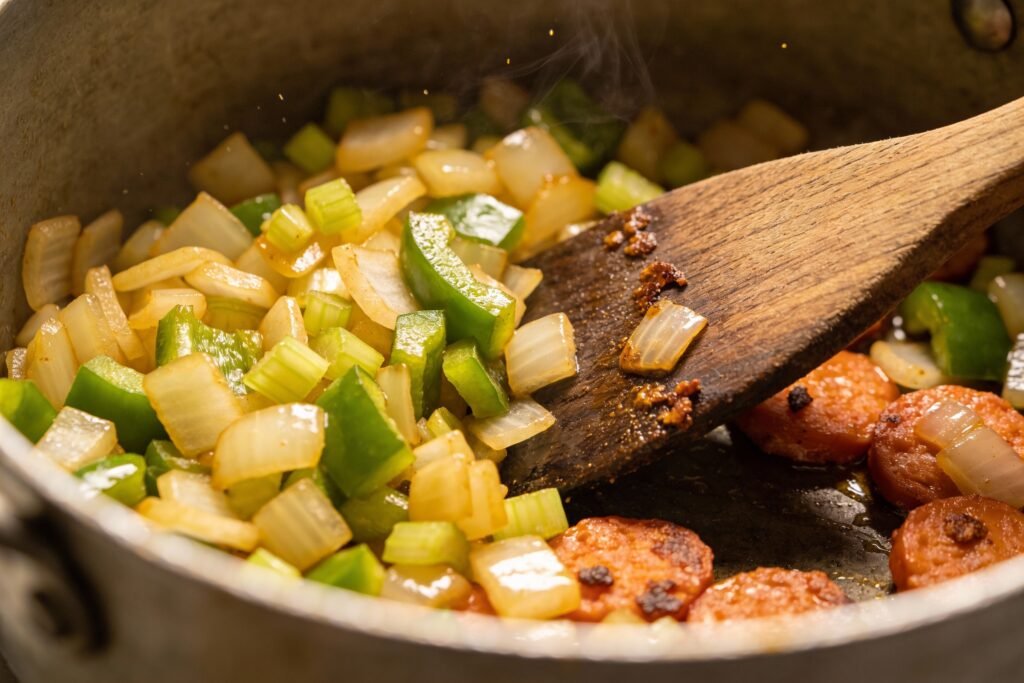
Building the flavor foundation by sautéing the “Holy Trinity” in the flavorful rendered fat
In the same pot—do not wipe it out—toss in your onion, bell pepper, and celery. Use a wooden spoon to scrape the bottom of the pot. Those brown bits stuck to the enamel? That’s the fond, and it is pure, concentrated flavor. Cook for about 5 minutes until softened, then add the garlic and cook for 60 seconds. Do not burn the garlic; bitter garlic ruins lives.
- Build the Flavor Base
Return the meat to the pot. Stir in your Cajun seasoning, paprika, and tomatoes (if you’re going the Creole route). Pour in the chicken broth and bring the mixture to a rolling boil.
- The Plunge
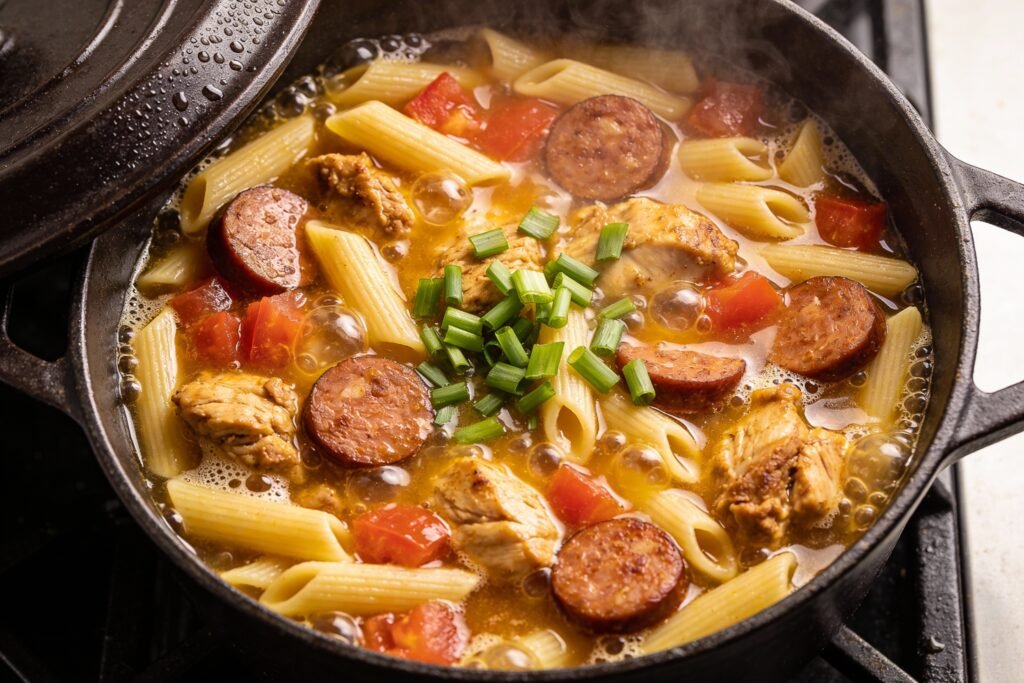
The crucial simmer: The pasta cooks directly in the broth, creating its own creamy sauce.
This is the crucial moment. Stir in the uncooked pasta. You need to ensure every single noodle is submerged in the liquid. If they are sticking out, they won’t cook evenly. Press them down.
- Simmer and Serve
Reduce the heat to a simmer and cover the pot. Cook for 12–15 minutes.
Pro-Move: Stir exactly once halfway through to prevent sticking, but resist the urge to over-mix, or you’ll break the pasta. Once the liquid is mostly absorbed and the pasta is al dente, remove from heat. Let it rest for 5 minutes. The sauce creates its final, silky texture as it cools. Garnish with green onions and serve immediately.
Pro-Tips for Success
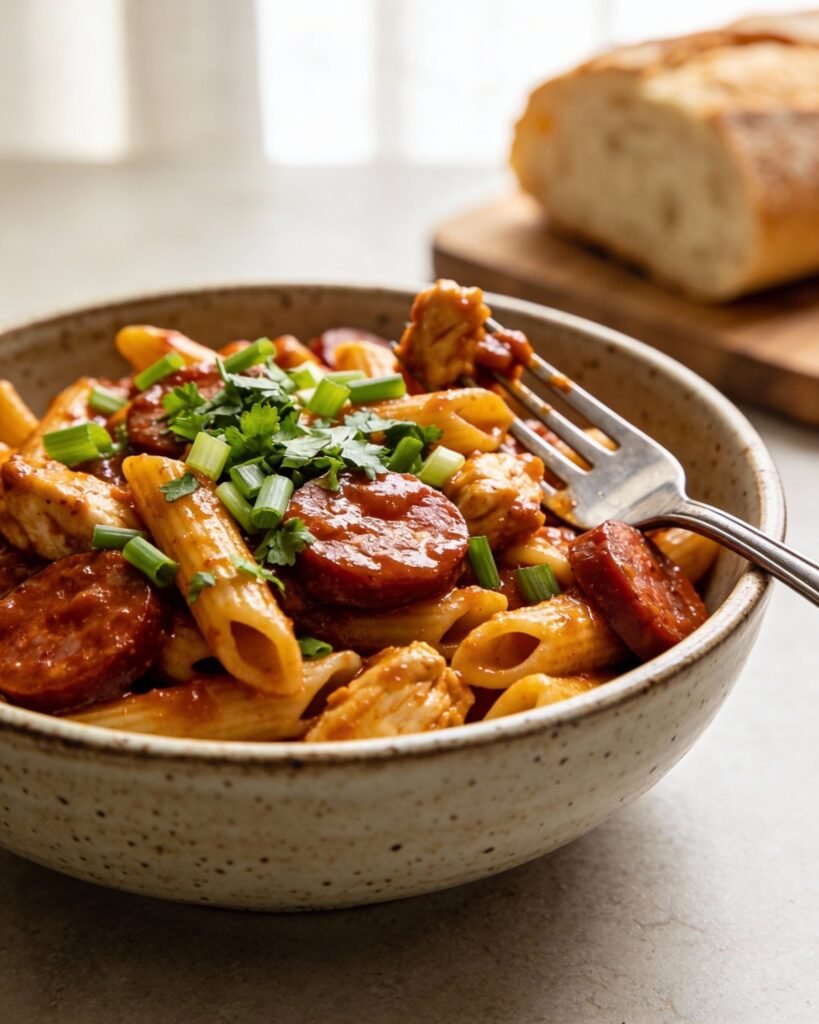
Serve warm and garnished for a taste of the South in a single bowl.
Cooking pasta in sauce is high-stakes compared to boiling water. Here is how to avoid the common pitfalls.
- Watch the Salt: Between the cured Andouille sausage, the Cajun seasoning, and the broth, salt levels can spike quickly. Always use low-sodium chicken broth. You can always add salt at the end, but you cannot take it out.
- Texture Management: Pasta continues to cook in the residual heat even after you kill the flame. This is called “carryover cooking.” Take the pot off the stove while the noodles still have a slight “bite” to them. If they are perfectly soft when you turn off the heat, they will be mush by the time you serve.
- Customize It: Want to make it a “Royal” Pastalaya? Toss in some raw, peeled shrimp during the last 5 minutes of cooking. Any earlier, and they’ll turn into rubber.
(FAQ)
1. What is the difference between Jambalaya and Pastalaya?
While both dishes originate from Louisiana and feature similar flavor profiles, the main difference lies in the starch. Jambalaya is a rice-based dish (similar to Paella), whereas Pastalaya swaps the rice for dry pasta. Pastalaya uses the same “Holy Trinity” (onion, celery, bell pepper) and meats (andouille sausage, chicken) but offers a creamier texture due to the starch released by the pasta during the one-pot cooking process.
2. What is the best type of pasta to use for Pastalaya?
The best pasta shapes for Pastalaya are short, sturdy noodles with ridges or folds, such as Penne, Bow Tie (Farfalle), or Rotini. These shapes hold up well to stirring and trap the thick, spicy sauce effectively. Avoid long, thin noodles like spaghetti or angel hair, as they tend to clump together and can become mushy in a one-pot cooking environment.
3. How do I reheat leftover Pastalaya without it drying out?
To reheat Pastalaya, place the desired portion in a microwave-safe bowl or a skillet over medium heat. Because the pasta absorbs moisture while sitting in the fridge, add a splash of chicken broth or water (about 1–2 tablespoons) before heating. This loosens the sauce and restores the creamy texture. Heat until warmed through, stirring occasionally to prevent sticking.
4. Can I add shrimp or seafood to this Pastalaya recipe?
Absolutely! Adding shrimp turns this dish into a “Royal Pastalaya.” However, seafood cooks much faster than chicken or sausage. To avoid rubbery, overcooked seafood, add raw, peeled shrimp during the last 4 to 5 minutes of the cooking time. The residual heat and simmering liquid will cook them perfectly pink by the time the pasta is al dente.
5. Is this Pastalaya recipe considered Cajun or Creole?
This depends on one specific ingredient: tomatoes. If you include diced tomatoes, the dish is considered Creole (Red Pastalaya). If you omit the tomatoes and rely on the browned meat fond and spices for color, it is considered Cajun (Brown Pastalaya). This recipe allows for either, though the inclusion of tomatoes is common for added acidity and moisture.