1)Intro
Let’s get this out of the way: yes, it’s called spotted dick, and yes, it’s been delighting (and alarming) dinner tables long before the internet got hold of it.

Classic spotted dick steamed suet pudding with currants served warm with hot custard
Spotted dick is a traditional British steamed suet pudding “spotted” with dried fruit and usually served with custard.
In this post, you’ll get the full, no-nonsense breakdown: what spotted dick actually is, what goes into a classic version, why it’s steamed (not baked), and how people serve it and tweak it today.
2) What Is Spotted Dick?
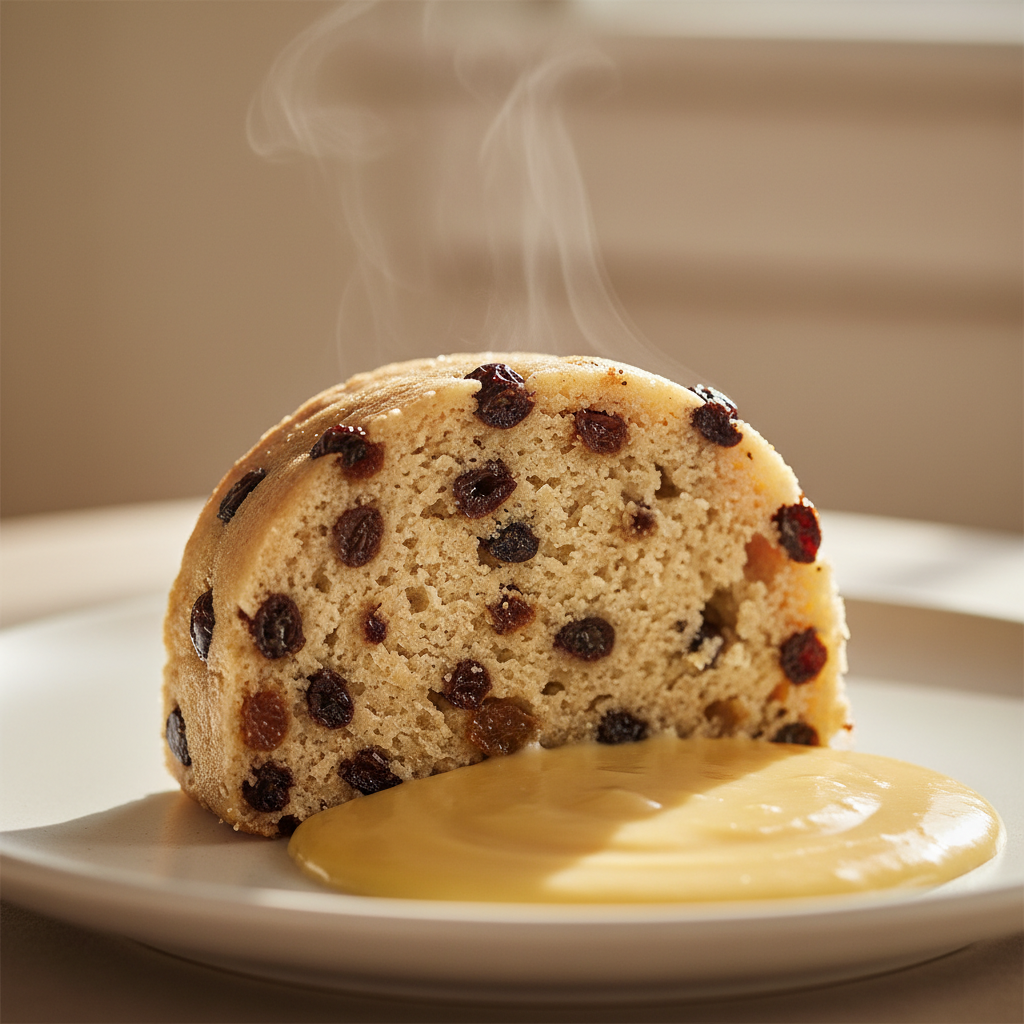
The “spots” are currants or raisins dotted through the moist steamed pudding.
2.1 The “steamed pudding” part
Spotted dick sits firmly in the comfort-food canon of British steamed puddings. That detail matters: it’s not baked. Instead, it’s cooked with gentle steam, which is what gives it its signature texture—moist, tender, and sliceable, the kind of pudding that cuts into thick rounds without crumbling into cake.
2.2 The “spotted” part
Those “spots” aren’t mysterious. They’re simply currants or raisins, folded through the dough so you get little bursts of fruit dotted throughout each slice—sweet, chewy punctuation marks in an otherwise soft, suet-rich pudding.
2.3 What it’s usually served with
Traditionally, spotted dick is served warm, sliced into generous pieces, and paired with hot custard. The custard isn’t an afterthought—it’s the silky counterpoint that turns a humble steamed pudding into a proper dessert moment.
3) What Spotted Dick Is Made Of (Classic Ingredients)
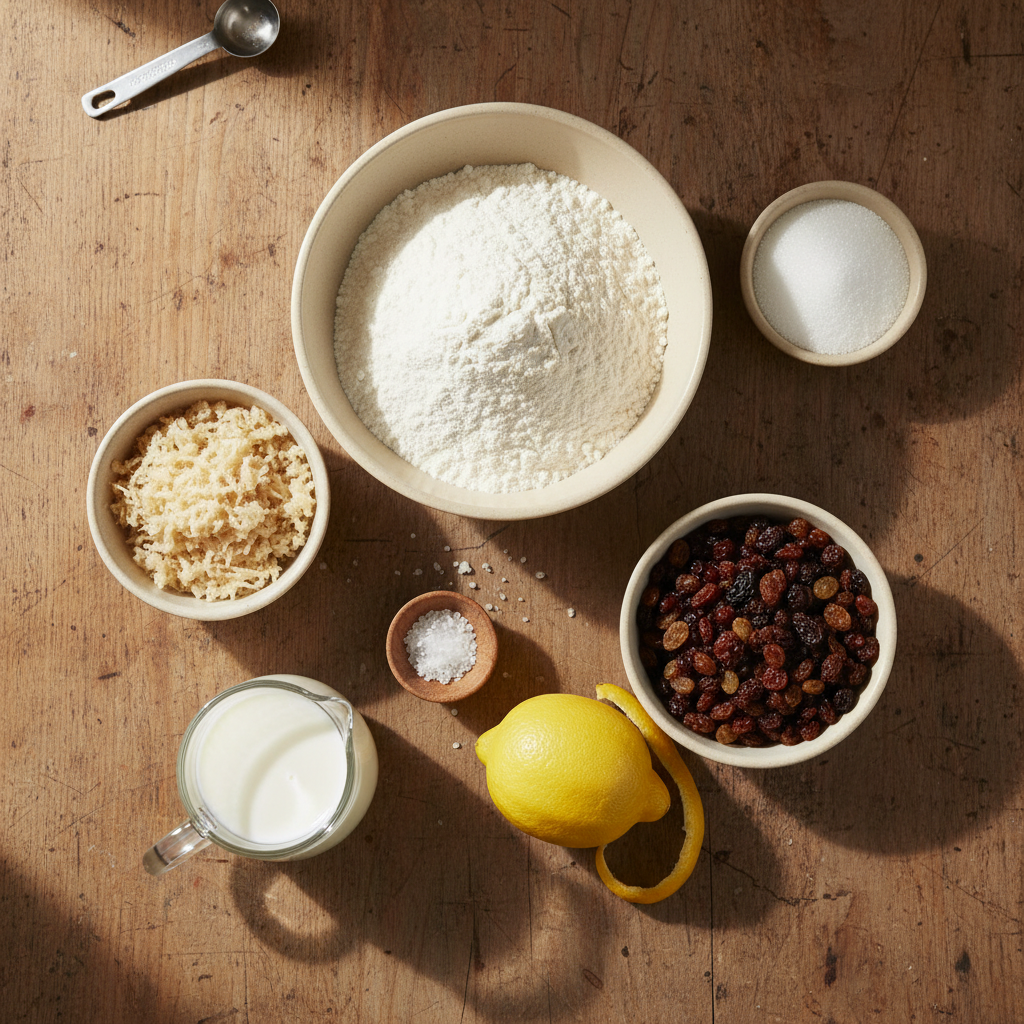
Traditional spotted dick ingredients: flour, suet, sugar, dried fruit, citrus zest, milk, and a pinch of salt
Exact quantities can vary from recipe to recipe, but a classic, traditional-style spotted dick is built from a small, reliable lineup:
- Self-raising flour (e.g., 225 g)
- Shredded suet (about 100 g)
- Beef suet is traditional; vegetable suet is widely used in modern versions
- Caster sugar (about 100 g)
- Currants or raisins (about 125 g) — the “spots”
- Zest of 1 lemon
- Optional note: some recipes also use orange zest
- Cold milk (about 125 ml, plus a little extra if needed)
- Pinch of salt
4) The Method (How the Recipe Works — Steamed, Not Baked)
Spotted dick is all about steam doing the heavy lifting. Instead of drying the pudding out the way an oven can, steaming cooks it gently and evenly—so you end up with something plush, moist, and properly sliceable.
4.1 Step 1 — Mix the dry ingredients
Start with a roomy bowl and combine:
- Self-raising flour
- Shredded suet
- Caster sugar
- Pinch of salt
- Currants or raisins
- Lemon zest (or orange zest if that’s your lane)
Mix until the fruit is evenly distributed—those little “spots” should be scattered through the mixture, not clumped in one corner.
4.2 Step 2 — Add milk and form a dough
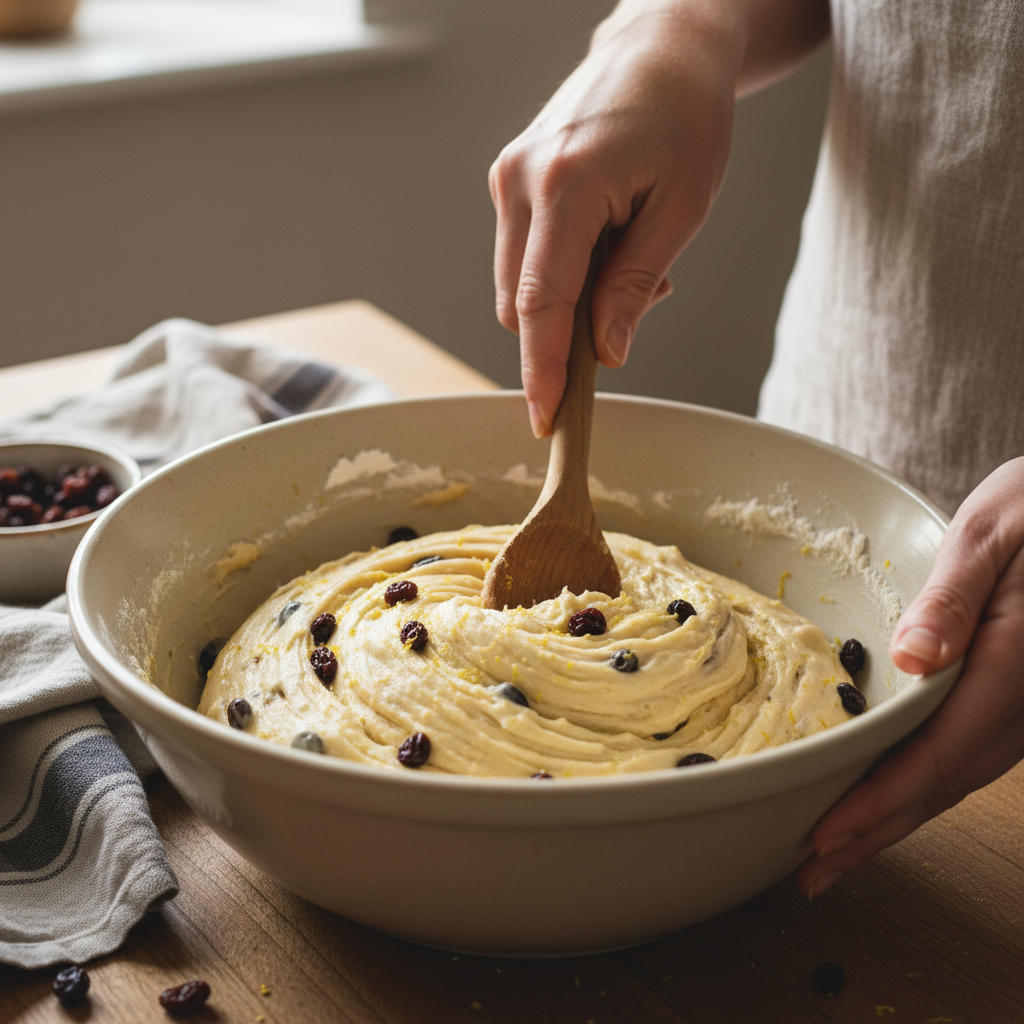
Add milk gradually until the dough is soft and moist not sticky
Add cold milk gradually, mixing as you go, until you get a soft dough.
You’re aiming for this sweet spot:
- Moist enough to hold together easily
- Not sticky or wet
If it feels a bit dry or crumbly, don’t panic—just add a small splash more milk and bring it together again.
4.3 Step 3 — Shape it (Two Common Formats)
From here, you’ve got two classic routes:
- Parchment roll method: shape the dough into a log, wrap it, and steam it like a traditional steamed roll.
- Greased pudding basin method: pack the dough into a greased basin and steam it into a more domed, sliceable pudding shape.
This next section focuses on the parchment roll, because it’s the iconic “cracker wrap” approach.
5) Choose Your Shape: Roll Method (Classic “Cracker” Wrap)
5.1 Shape
Turn the dough out and form it into a fat roll about 20 cm long. Think sturdy and even—something that will slice neatly later.
5.2 Wrap
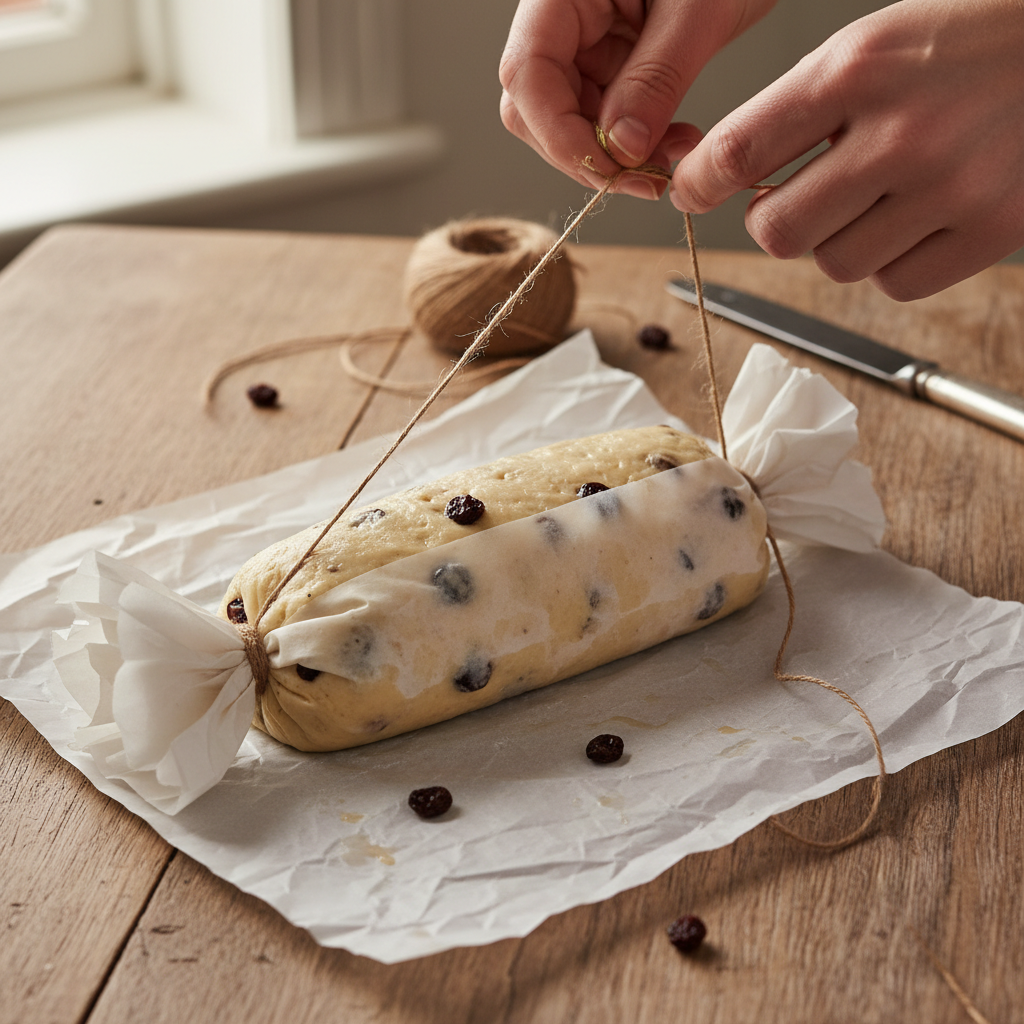
Wrap the roll loosely in parchment and tie the ends like a cracker to allow for expansion
Wrap the roll loosely in baking parchment, giving it breathing room to expand as it steams.
Then tie the ends like a cracker—snug enough to hold its shape, but not so tight you strangle the pudding before it’s had a chance to puff up.
5.3 Steam

Steam (don’t bake) for a tender, sliceable puddin keep the water topped up
Place it over boiling water and steam for about 1½ hours, lid on.
One rule that matters: keep topping up the pan so it doesn’t boil dry. Steaming is a slow, gentle cook—great for texture, unforgiving if you forget the water.
5.4 Rest + Slice
When it’s done, let it cool slightly, then unwrap.
Slice it thickly, serve it warm, and (ideally) get the custard ready—this is not a dessert that benefits from being left to sit around looking lonely.
6) Alternative: Pudding Basin Method (Mention + When to Use It)
If the parchment “cracker” roll feels a bit like culinary origami, there’s a calmer, more old-school option: steam spotted dick in a greased pudding basin instead. Same basic mixture, same steaming idea—just a different final shape.
This method is ideal if you:
- Prefer a neat, bowl-shaped pudding you can turn out and slice
- Want something that feels a touch more “proper pudding” and less like a wrapped sweet loaf
- Like the simplicity of packing the dough into a container and getting on with your life
(If you’re after the most classic visual, though, the roll still wins on theatre.)
7) Serving Spotted Dick (The Classic Finish)

Serve thick slices of spotted dick with plenty of hot custard
7.1 The standard way
Spotted dick is traditionally served warm, sliced thickly, with hot custard. The pudding is rich and comforting; the custard makes it luxurious—like the difference between a good jumper and a good jumper with a sharp coat over it.
7.2 Optional: Quick homemade custard outline
If you want to keep it classic and homemade, the basic custard rhythm is:
- Heat milk
- Whisk egg yolks with sugar
- Cook gently (stirring) until it coats a spoon
That’s it: silky, simple, and exactly what spotted dick wants to be swimming in.
8) Variations + Substitutions (Modern Twists Still True to the Classic)
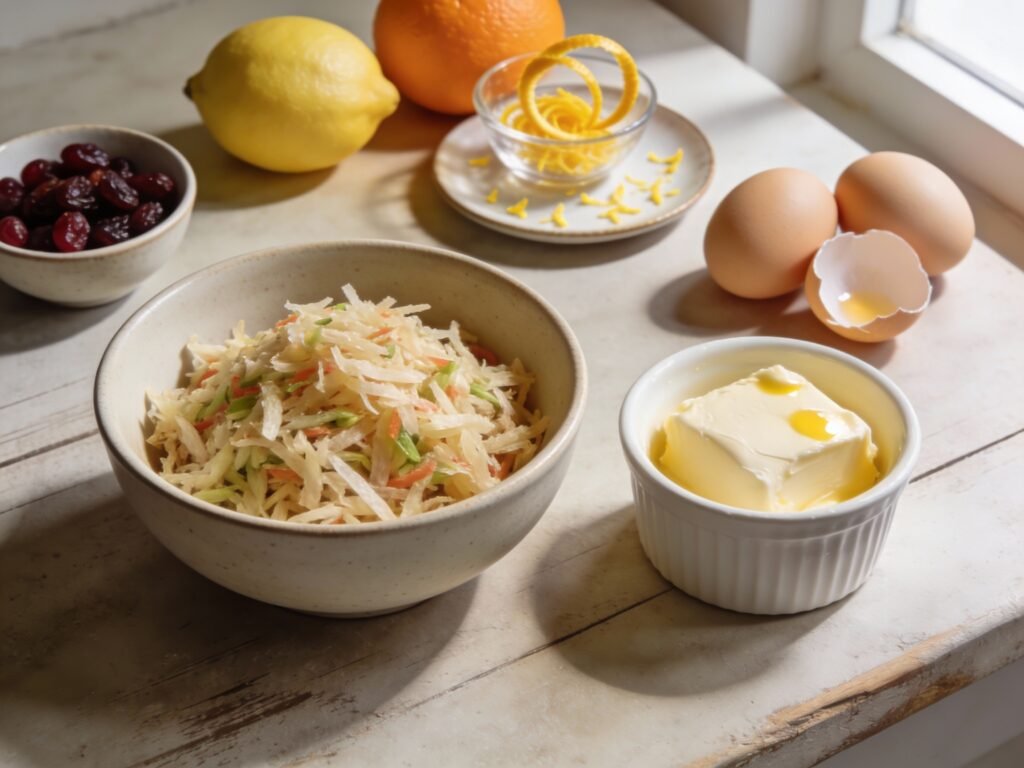
Modern swaps: vegetable suet or butter, plus optional eggs for a more sponge-like texture
8.1 Suet swaps
Traditional recipes use beef suet, but plenty of modern kitchens go for vegetable suet, which is now widely common. Some versions also use butter instead of suet, changing the character slightly—still comforting, just a different kind of richness.
8.2 Texture tweaks
If you like your pudding leaning more sponge than suet-dough, you’ll find recipes that add eggs. The result is typically a little lighter and more cake-adjacent, while still staying in the steamed-pudding family.
8.3 Related name/relative
And if you stumble across Irish “spotted dog,” you’re in the same neighbourhood: it’s a related currant-studded idea, but it’s often more like a loaf with currants than a steamed pudding served in custard.
FAQ:
1) What is spotted dick in British cooking?
Spotted dick is a traditional British steamed suet pudding “spotted” with dried fruit (usually currants or raisins) and typically served warm with custard.
2) What are the “spots” in spotted dick?
The “spots” in a spotted dick pudding are pieces of currants or raisins dotted throughout the dough, creating little bursts of sweetness in every slice.
3) How long do you steam spotted dick (and why is it steamed, not baked)?
Most spotted dick recipes steam the pudding for about 1½ hours. Steaming (instead of baking) keeps it moist, tender, and sliceable, which is the classic texture people expect from a British steamed pudding.
4) Can I make spotted dick in a pudding basin instead of a roll?
Yes. Spotted dick can be steamed either as a parchment-wrapped roll or in a greased pudding basin. The basin method is a good option if you prefer a more bowl-shaped, traditional pudding for turning out and slicing.
5) What do you serve with spotted dick (and how do you make quick custard)?
Spotted dick is traditionally served warm, sliced, with hot custard. For a quick homemade custard: heat milk, whisk egg yolks with sugar, then cook gently until it coats a spoon.