Gallo Pinto is comfort food with a backstory, and it starts with two humble staples. This section covers what it is, why it matters, and how this version will be cooked.
Gallo Pinto Recipe (Costa Rican-Style Rice and Beans)
Gallo pinto is a Central American dish made by mixing cooked rice and beans, and it is closely tied to both Costa Rica and Nicaragua.
Its name means spotted rooster, a nod to the speckled look you get when rice is folded into black or red beans.
This post walks through an easy skillet method that leans on day-old rice and day-old beans for the best texture.
For the classic Costa Rican touch, it also uses Salsa Lizano to bring that signature savory, lightly tangy depth.
What Is Gallo Pinto?
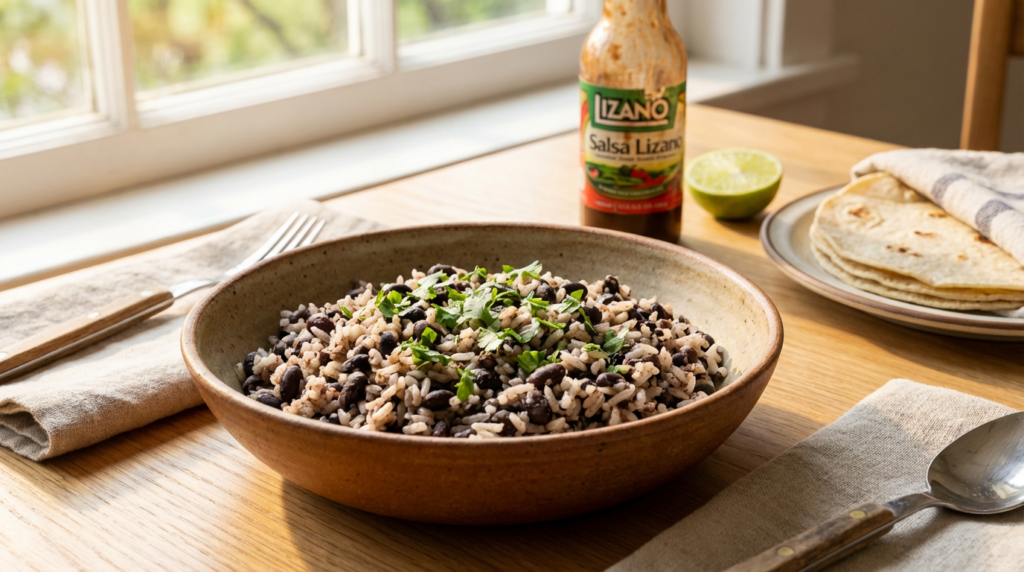
A classic Costa Rican gallo pinto: rice, beans, and that signature savory kick
At its core, gallo pinto is simply rice and beans cooked and mixed together, but it carries real cultural weight in Costa Rica and Nicaragua.
In Costa Rica, it is especially known as a common breakfast staple, often showing up early in the day as a go-to plate.
Costa Rica vs Nicaragua
Costa Rican-style gallo pinto often includes Salsa Lizano and commonly uses black beans, plus aromatics like onion, peppers, and cilantro.
Nicaraguan versions are often simpler, commonly built around red beans and onion with fewer extra ingredients.
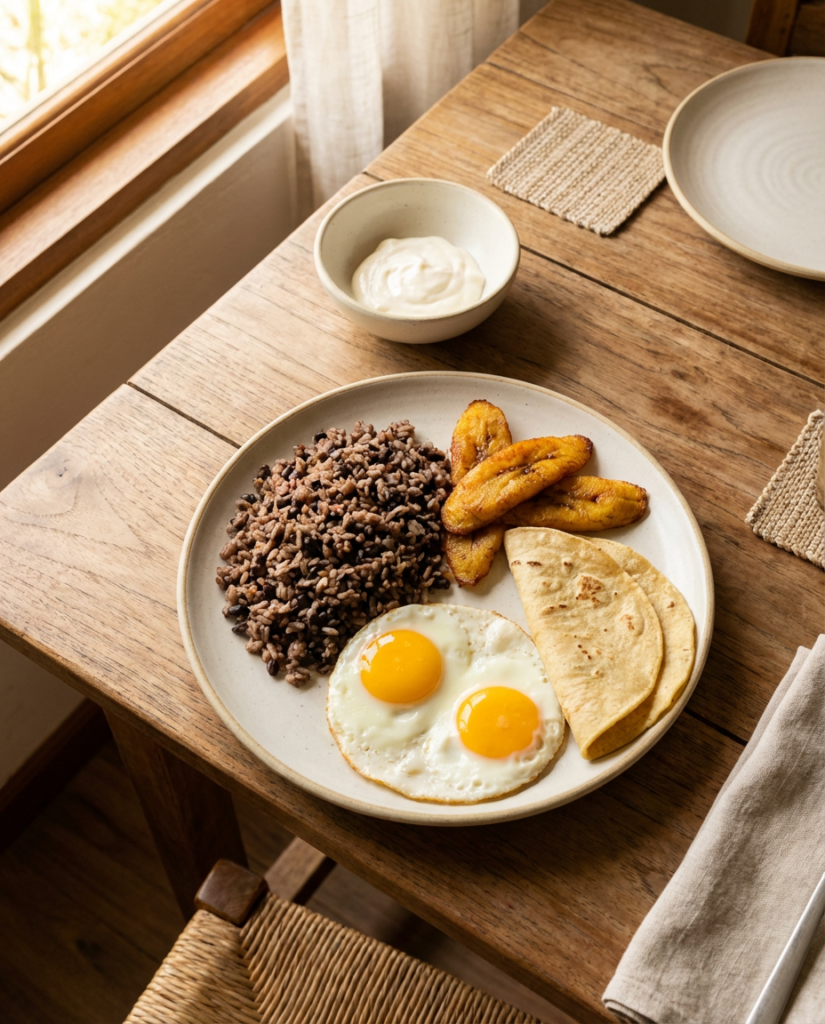
How it’s often served: a breakfast plate built around rice and beans
Ingredients You Need (Costa Rican-Style)
This Costa Rican-style gallo pinto is built on day-old cooked rice and day-old cooked beans for the best texture in the skillet.
You’ll also need oil, finely chopped onion, finely chopped red bell pepper (or sweet pepper), salt, bean broth or water, chopped cilantro, and Salsa Lizano.
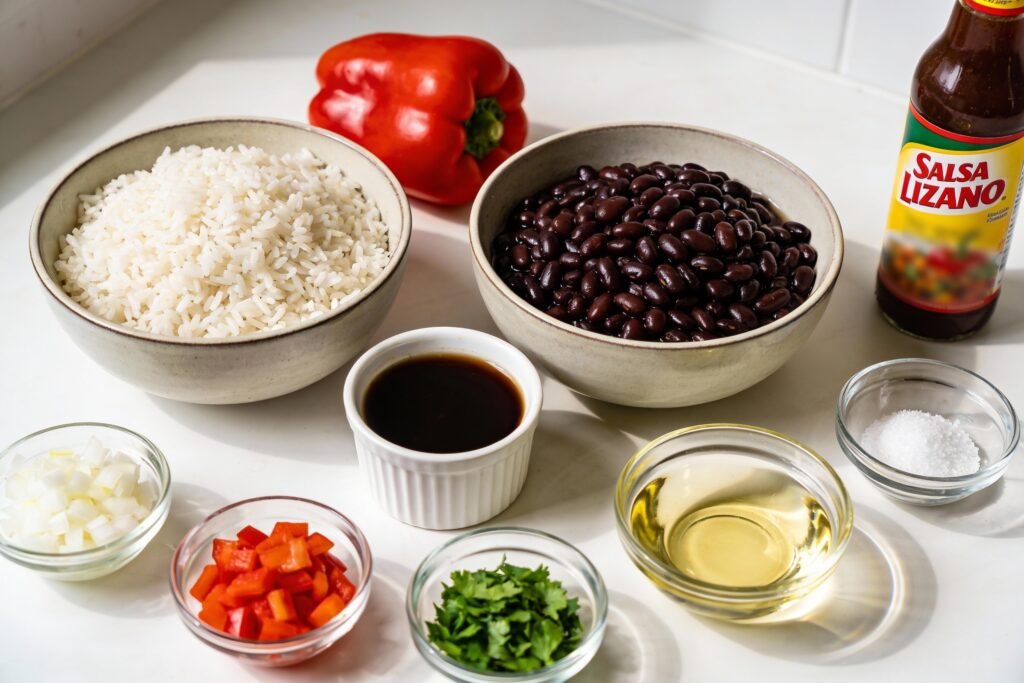
Everything you need for Costa Rican-style gallo pinto in one clean lineup.
Ingredients List:
- 2 cups cooked white rice (day-old is best)
- 1.5 cups cooked black beans (rinsed if canned, keep 1/4 cup bean broth)
- 1 tbsp vegetable oil
- 1 small yellow onion, finely chopped
- 1/2 red bell pepper, finely chopped
- 2–3 tbsp Salsa Lizano (essential for authentic flavor)
- 1/4 cup fresh cilantro, chopped
- Salt and pepper to taste
Why Salsa Lizano matters
Salsa Lizano is widely treated as the signature Costa Rican touch, and it’s a key flavor driver in many Costa Rican versions.
It’s often compared to Worcestershire sauce, and Worcestershire is sometimes used as a substitute option if Lizano isn’t available.
Rice and beans notes
Long-grain rice tends to work better than sticky rice because it stays more separate in the pan.
If using canned beans, save some of the liquid to use as bean broth, and reduce added salt if the beans are already salted.
How to Make Gallo Pinto (Stovetop Skillet)
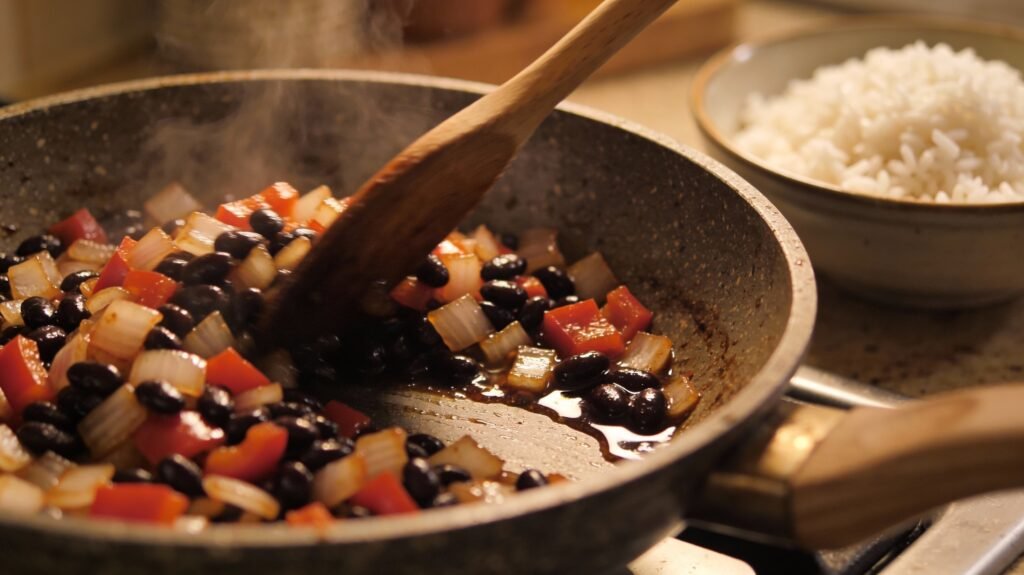
Build flavor first, then fold in the rice to finish the pan.
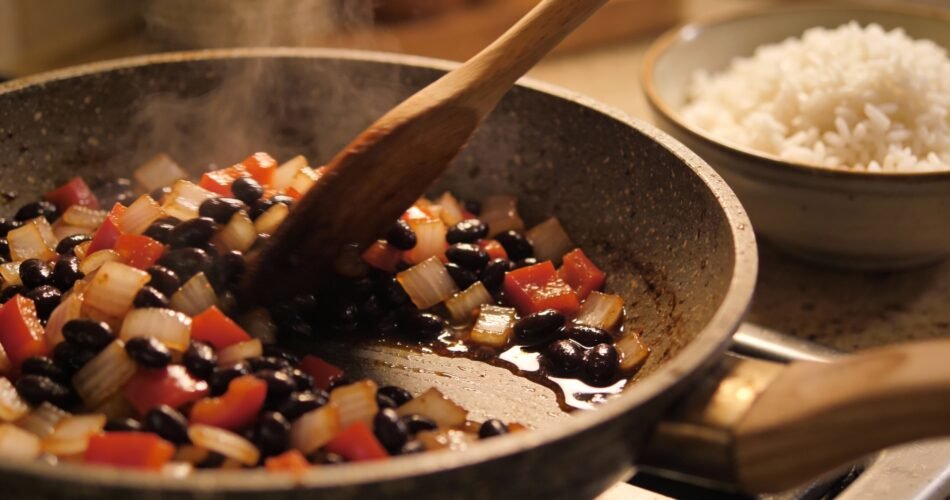
- Step 1: Warm the oil in a large skillet over medium heat, then sauté the onion and red pepper with salt until the onion turns translucent.
- Step 2: Add the cooked beans plus a splash of bean broth (or water), then stir so the beans coat the sautéed vegetables.
- Step 3: Add the cooked rice and toss until the grains are evenly mixed and everything is hot.
- Step 4: Stir in the cilantro, then mix in Salsa Lizano and taste for seasoning before serving.
Tips for the Best Texture and Flavor
Using leftover, day-old rice and beans is part of the tradition, and it also helps the dish cook up better in the skillet.
For the best texture, avoid sticky rice and lean toward rice that stays separate as you toss everything together.
Variations You Can Try
Costa Rican-style gallo pinto often includes Salsa Lizano, while Nicaraguan versions often lean simpler with fewer add-ins.
You can also swap the beans based on the regional style you want: black beans are common in Costa Rican versions, while red beans are common in Nicaraguan versions.
What to Serve With Gallo Pinto
Gallo pinto is commonly eaten for breakfast alongside eggs, warm tortillas, fried plantains, and often natilla (sour cream) or fresh cheese.
These sides turn the rice-and-beans base into a full, classic breakfast plate.
Make-Ahead and Leftovers
Gallo pinto is traditionally a smart way to reuse yesterday’s rice and beans, so it fits naturally into a make-ahead routine.
Store leftovers in an airtight container in the refrigerator for up to 3–5 days. Reheat in a skillet over medium heat, adding a splash of water if the rice looks dry.
FAQ
1) What is gallo pinto?
Gallo pinto is a Central American rice-and-beans dish closely tied to Costa Rica and Nicaragua.
Its name means spotted rooster, referring to the speckled look when rice mixes with beans.
2) What’s the difference between Costa Rican and Nicaraguan gallo pinto?
Costa Rican gallo pinto commonly includes Salsa Lizano and often uses black beans plus aromatics like onion, peppers, and cilantro.
Nicaraguan versions often lean simpler and commonly use red beans and onions.
3) Do I really need Salsa Lizano, and what can I use instead?
Salsa Lizano is widely treated as the signature Costa Rican touch and a key flavor driver in Costa Rican-style gallo pinto.
It’s often compared to Worcestershire sauce, so Worcestershire is a common substitute if you can’t find Lizano.
4) Why does day-old rice work best for this gallo pinto recipe?
Using leftover, day-old rice and beans is traditional, and it helps the mixture toss together cleanly in the pan.
Long-grain rice is a smart choice because it tends to stay more separate than sticky rice.
5) What should I serve with gallo pinto?
Gallo pinto is commonly served for breakfast in Costa Rica.
Popular pairings include eggs, warm tortillas, fried plantains, and natilla (sour cream) or fresh cheese.