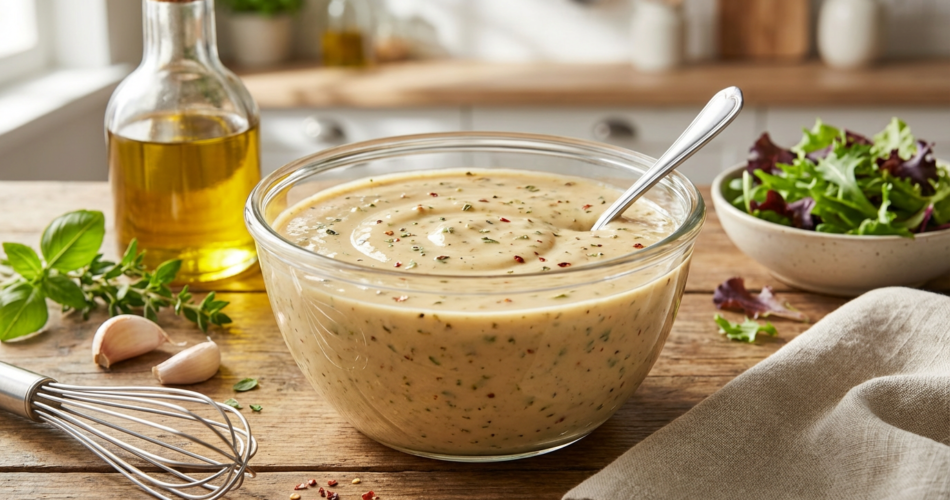
Quick Answer: What Is Creamy Italian Dressing?
Creamy Italian Dressing is an emulsified salad dressing combining vinegar (acid) and oil (fat) with a stabilizer like mayonnaise, Greek yogurt, or parmesan cheese. Unlike traditional vinaigrettes that separate, creamy Italian dressing stays suspended for a luxurious, velvety texture—making it ideal for robust greens like romaine or kale. This kitchen staple delivers bold Italian flavors with restaurant-quality creaminess in minutes.
The Science of Emulsification: Why Your Dressing Stays Creamy

The difference between separated vinaigrette and stable emulsified creamy dressing
Here’s what most recipes won’t tell you: creamy Italian dressing works because of science, not magic.
Oil and vinegar are natural enemies. Oil molecules repel water (hydrophobic), while vinegar is water-based (hydrophilic). When you mix them, they separate—this is why basic vinaigrettes break within minutes. But a homemade creamy Italian dressing solves this problem with an emulsifier.
The Molecular Glue: Understanding Emulsifiers

Lecithin and casein molecules bind oil and water together, creating stable emulsification
The secret ingredient is lecithin—found naturally in egg yolks and mayonnaise—or casein, a protein in dairy products. These molecules act as “molecular glue,” with one end bonding to oil and the other to water. The result? A stable, creamy suspension that lasts for days.
Why This Matters for Your Dressing:
- Mayonnaise: Contains 80% oil + egg yolk (lecithin). Creates the thickest, most indulgent texture.
- Greek Yogurt: Contains casein protein. Delivers creaminess with 10x less fat than mayo.
- Parmesan Cheese: Adds both casein AND flavor complexity. Works best when micro-planed (finer texture = better emulsification).
Pro tip: Pre-shredded cheese contains anti-caking agents that actually prevent emulsification. Always use block Parmesan.
Choose Your Adventure: Three Creamy Italian Dressing Recipes
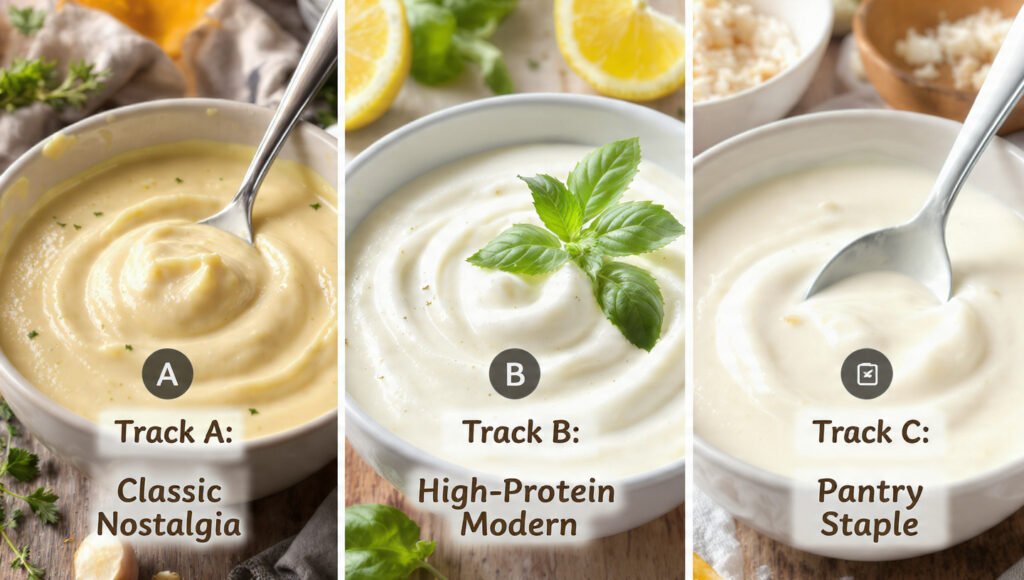
Three creamy Italian dressing recipes tailored to different kitchens and dietary needs
Not all creamy Italian dressings are the same. Choose the base that matches your kitchen, your diet, and your cravings.
Track A: The Classic Nostalgia Recipe (Olive Garden Vibes)
Why This One: If you grew up on Olive Garden’s unlimited breadsticks and salad, this is the creamy Italian dressing you’ve been searching for.
Ingredients:
- ½ cup mayonnaise
- ¼ cup white vinegar (or red wine vinegar for depth)
- 1 tablespoon honey
- 1 tablespoon grated Parmesan
- 1 teaspoon dried oregano
- ½ teaspoon garlic powder
- ½ teaspoon black pepper
- ¼ teaspoon salt
- 2 tablespoons olive oil
Instructions:
- Whisk mayo and vinegar together until smooth
- Add honey and stir (honey balances the acid)
- Fold in Parmesan, oregano, garlic powder, salt, and pepper
- Drizzle olive oil while whisking to create a silky finish
- Taste and adjust acidity (more vinegar) or richness (more mayo)
Best For: Heavy salad greens, pasta salad, marinades for chicken or vegetables
Track B: The High-Protein “Modern” Recipe (Healthy 2025)
Why This One: Swap mayo for Greek yogurt and cut 70% of the calories. You’ll get 8g of protein per serving and a lighter, tangier profile—perfect for the calorie-conscious cook.
Ingredients:
- ¾ cup non-fat Greek yogurt
- 3 tablespoons lemon juice (not vinegar—brightness over tartness)
- 1 tablespoon honey
- 2 cloves fresh garlic, minced (not powder)
- 1 teaspoon dried basil
- ½ teaspoon red pepper flakes
- 1 tablespoon extra-virgin olive oil
- Salt and pepper to taste
Instructions:
- Combine Greek yogurt and lemon juice in a bowl
- Whisk until smooth and creamy
- Fold in fresh garlic, basil, and red pepper flakes
- Drizzle olive oil while whisking
- Season with salt and pepper
- Chill for 30 minutes before serving (flavors deepen as it rests)
Best For: Light salads, grain bowls, as a dip, drizzled over grilled vegetables
Track C: The Pantry Staple Recipe (No Mayo in Sight)
Why This One: You’re out of mayo or Greek yogurt, but you have whole milk, Parmesan, and dried herbs. This recipe works anyway—and the results will surprise you.
Ingredients:
- 1 cup whole milk
- ¼ cup grated Parmesan (micro-planed)
- 3 tablespoons apple cider vinegar
- 1 tablespoon honey
- 1 teaspoon Italian seasoning (or ½ tsp each oregano, basil, thyme)
- ½ teaspoon garlic powder
- 2 tablespoons olive oil
- Salt and pepper
Instructions:
- Heat milk gently (not boiling—warmth helps emulsification)
- Slowly whisk in Parmesan until fully melted
- Remove from heat and let cool for 2 minutes
- Whisk in vinegar and honey
- Add herbs and garlic powder
- Drizzle olive oil while whisking vigorously
- Transfer to a jar and refrigerate
Best For: Quick salads, budget-friendly batch cooking, creamy pasta dressings
The Ingredient Deep Dive: Understanding Each Component
Vinegars: Not All Acid Is Equal
| Vinegar Type | Flavor Profile | Best Use | Creamy Italian Dressing Role |
|---|---|---|---|
| White Vinegar | Sharp, neutral | Classic dressings | Bright acidity without competing flavors |
| Red Wine Vinegar | Tangy, slightly sweet | Bold, rustic dressings | Adds depth; popular in Track A |
| Apple Cider Vinegar | Fruity, warm | Track C pantry version | Softens harsh edges with natural sweetness |
| Lemon/Lime Juice | Citrus, fresh | Light, modern versions | Track B’s brightness without vinegar sharpness |
Pro Rule: 1 part acid (vinegar/lemon) to 2 parts oil, adjusted by the stabilizer’s richness.

Four acid options for creamy Italian dressing: each brings unique flavor and brightness
Fresh vs. Dried Herbs: The Conversion Guide
When adapting your homemade creamy Italian dressing, remember this golden ratio:
1 teaspoon dried = 1 tablespoon fresh
Why? Drying concentrates flavor—it removes water weight, leaving behind pure herb essence.
| Herb | Dried Amount | Fresh Amount | Flavor Notes |
|---|---|---|---|
| Oregano | 1 tsp | 1 tbsp | The backbone of Italian dressing; use dried for stability |
| Basil | ½ tsp | 1½ tbsp | Delicate; fresh basil loses potency when dried |
| Thyme | ½ tsp | 1½ tbsp | Woodsy; adds sophistication |
| Parsley | ½ tsp | 1½ tbsp | Garnish herb; use fresh for brightness |
The Parmesan Secret: Why Micro-Planing Changes Everything
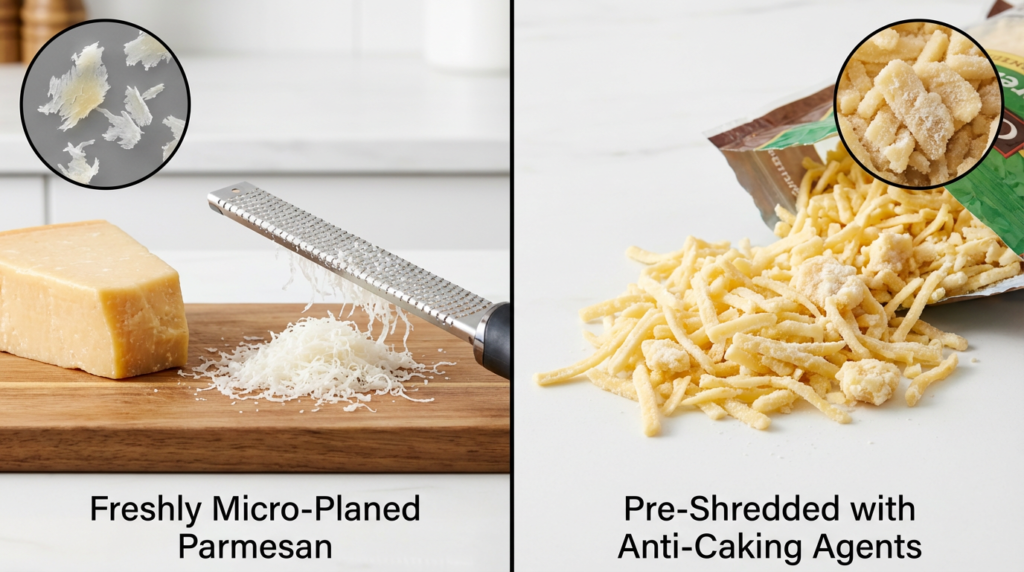
Micro-planed Parmesan emulsifies smoothly; pre-shredded cheese prevents proper emulsification
Pre-shredded Cheese: Coated in cellulose (anti-caking agent) that prevents emulsification. It won’t melt smoothly into your dressing; instead, you’ll get gritty clumps.
Freshly Micro-Planed Parmesan: Creates a fine powder that dissolves instantly into creamy Italian dressing, acting as an emulsifier while adding umami depth.
The Test: If your dressing looks gritty, you used the wrong cheese. Toss it and start again with a block.
Troubleshooting: “Why Did My Creamy Italian Dressing Break?”
Even seasoned cooks encounter separated dressing. Here’s how to fix it—and why it happened.
Problem: Your Dressing Looks Runny or Separated
Cause: Temperature shock (cold mayo + warm vinegar), over-mixing, or insufficient emulsifier
The Fix: Don’t toss it. Recovery is a 10-second intervention:
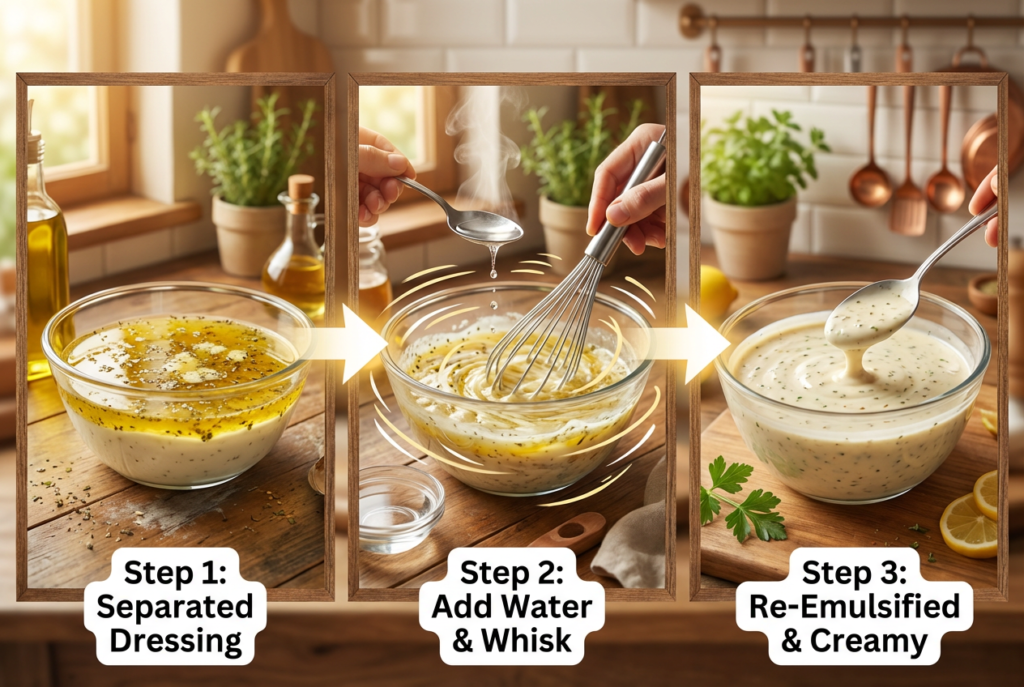
Fix separated dressing in 10 seconds with warm water and vigorous whisking
- Add 1 teaspoon of warm water
- Whisk vigorously for 30 seconds, OR
- Use an immersion blender on low speed for 10 seconds
- The dressing will re-emulsify and thicken
Problem: Your Dressing Is Too Thick
Cause: Too much mayo or cheese; not enough liquid
The Fix: Whisk in 1-2 tablespoons of milk or water, one tablespoon at a time. Taste as you go.
Problem: It Tastes Too Acidic or Too Bland
Cause: Wrong vinegar ratio or insufficient seasoning
The Fix:
- Too Acidic: Add 1 tablespoon honey or a tablespoon of mayo to balance
- Too Bland: Add ½ teaspoon garlic powder, salt, or fresh cracked black pepper; let it rest 30 minutes for flavors to meld
Best Uses for Your Creamy Italian Dressing
| Use Case | Best Recipe Track | Why It Works |
|---|---|---|
| Leafy Green Salads | Track A (Classic) | Mayo-based coating clings to sturdy romaine and kale |
| Pasta Salad | Track A or C | High acid + creaminess = perfect emulsion for pasta absorption |
| Grain & Buddha Bowls | Track B (Greek Yogurt) | Lighter weight + protein boost aligns with bowl philosophy |
| Creamy Marinades | Track A (High Oil) | Oil carries fat-soluble flavors into chicken or vegetables |
| Dip or Spread | Track B | Tanginess + creaminess makes it work as mayo alternative |
| Budget Batch Cooking | Track C (Pantry) | Uses shelf-stable ingredients; makes 1.5 cups for <$1 |
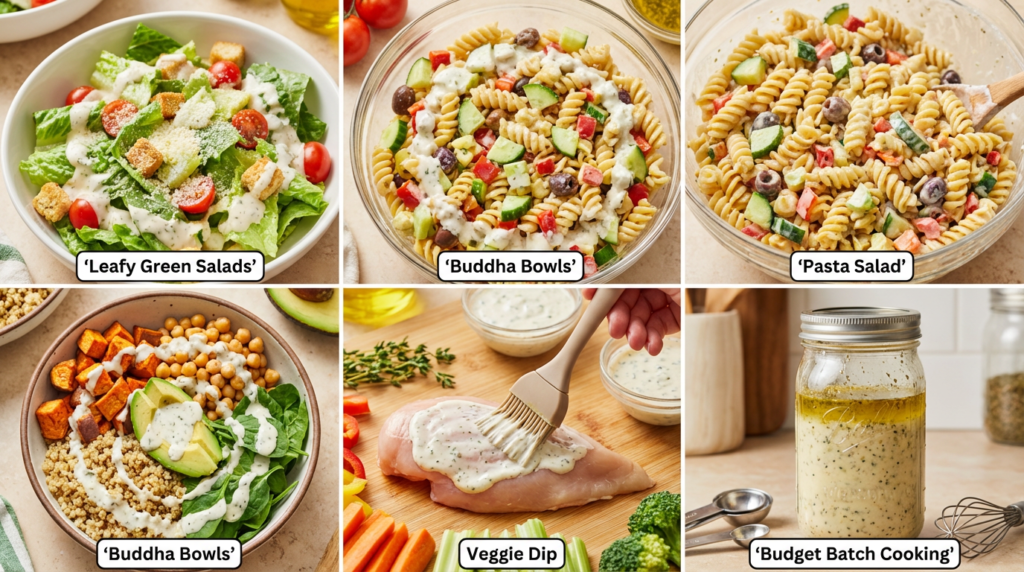
Creamy Italian dressing transforms salads, marinades, bowls, and dips.
Storage & Shelf Life: How Long Does It Last?
- Track A (Mayo-Based): 7-10 days, refrigerated in an airtight jar
- Track B (Greek Yogurt): 5-7 days; tanginess increases over time (still safe, just more sour)
- Track C (Milk-Based): 4-5 days; shake well before each use as it may separate slightly
Pro Tip: Make a batch every Sunday. By mid-week, the flavors deepen and meld together—many cooks say day 3 tastes better than day 1.
The Final Word: Master the Science, Master Your Dressing
Creamy Italian dressing isn’t complicated—it’s chemistry. Understand emulsifiers, respect your vinegar ratios, and choose the right stabilizer for your lifestyle (mayo for indulgence, Greek yogurt for health, milk for budget).
Whether you’re targeting Olive Garden nostalgia, a high-protein 2025 kitchen, or a resourceful pantry hack, these three recipes deliver bold Italian flavor with creamy texture every single time.
Your turn: Which track are you trying first? Let us know in the comments—especially if you swap in unexpected ingredients or discover your own perfect ratio. Great cooking is built on shared experiments.