Seitan has become a game-changer for plant-based eaters seeking high-protein alternatives to meat. But let’s be honest: seitan recipes often disappoint. That rubbery, dense texture? It’s not a feature—it’s a fixable problem. In this guide, I’ll share the science behind perfect seitan texture, three distinct cooking methods, and the exact modifications that transform mediocre seitan into restaurant-quality results.
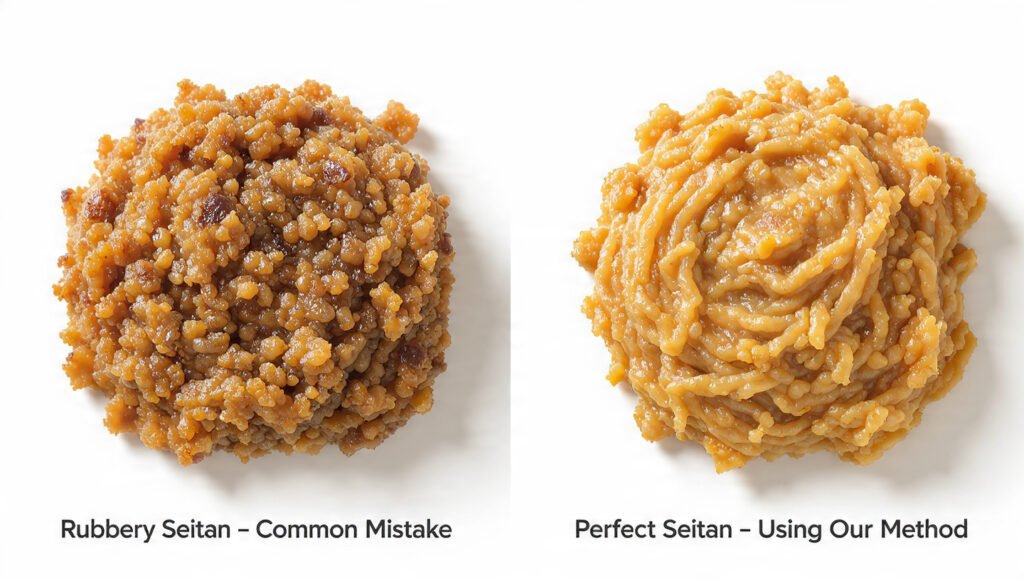
Before and after seitan texture comparison
Key Takeaways: Your Quick Reference
Before we dive deep, here’s what you need to know about seitan recipes:
- Best for Shredding: Washed Flour Method (2 hours)
- Best for Speed: Vital Wheat Gluten + Chickpea Flour (30 minutes)
- Best Texture: Steam first, then pan-fry or air fry
- Secret Ingredient: Apple cider vinegar (eliminates the “wheat” taste)
The Science of Texture: Why Your Seitan Gets Rubbery
Most seitan recipes fail at the explanation stage. They say “knead for 5 minutes” and expect you to succeed. But understanding why texture matters is the difference between rubbery disappointment and tender, meaty perfection.
The Sponge Analogy
Think of seitan as a sponge. Pure vital wheat gluten creates tightly woven “rubber bands” of protein. When you cook these strands without interruption, they contract aggressively—resulting in that infamous rubbery texture.
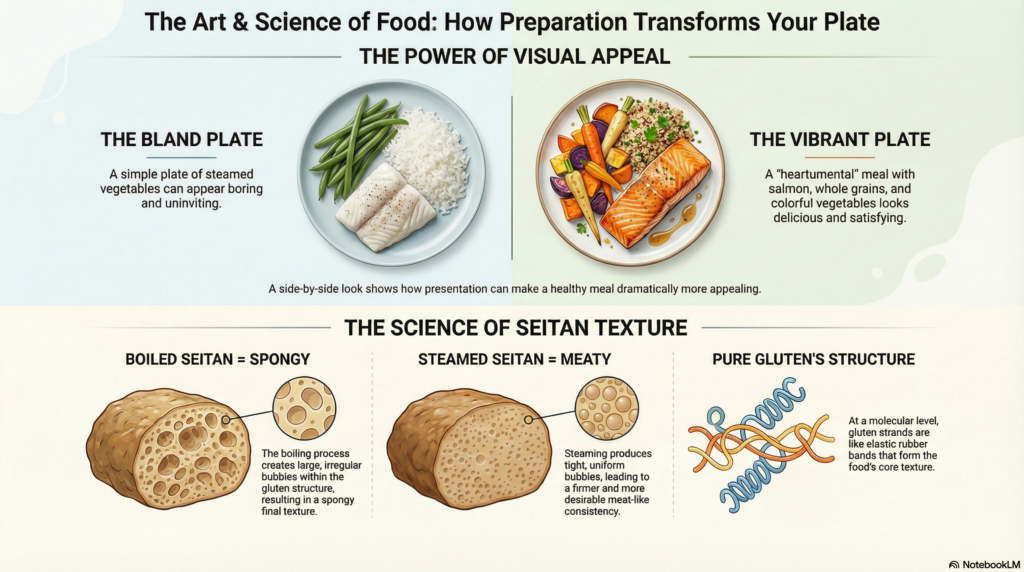
Boiled vs. steamed seitan texture breakdown
The Problem with Boiling:
- High heat creates large, irregular bubbles
- The result? A brainy, spongy texture (think: chewed bubble gum)
- Texture is unpredictable and unpleasant
Why Steaming Wins:
- Lower, gentler heat creates tight, uniform bubbles
- The result? Dense, meaty texture that mimics pulled pork or chicken
- You maintain control over the final consistency
The “Cut the Gluten” Rule
Here’s the secret most seitan recipes miss: pure gluten equals rubber. You must “interrupt” the gluten strands with fat or legume flour. This prevents the proteins from contracting uniformly, giving you a softer, more natural bite.
The Solution: Add ¼ cup chickpea flour to every cup of vital wheat gluten. This ingredient does the heavy lifting for texture improvement.
Master Seitan Recipe: Choose Your Adventure
Instead of following one rigid seitan recipe, I’m giving you a flexible Core Dough with three distinct cooking paths. Pick the method that matches your meal plan.
The Core Dough (The Foundation)
| Ingredient | Amount |
|---|---|
| Vital Wheat Gluten | 1 cup |
| Chickpea Flour (The “Anti-Rubber” Agent) | ¼ cup |
| Onion/Garlic Powder | 1 tsp |
| Salt | ½ tsp |
| Black Pepper | ¼ tsp |
The Liquid Base:
- ¾ cup vegetable broth
- ¼ cup water
- 1 tbsp molasses (adds depth without soy)
- 1 tbsp apple cider vinegar (cuts wheat flavor)
Preparation:
- Combine dry ingredients in a bowl
- Mix wet ingredients separately, then combine with dry mixture
- Knead for 2-3 minutes until firm (don’t overwork—just until it holds together)
- Wrap tightly and let rest for 10 minutes
Path A: The “Deli Slice” (Steaming Method)
Perfect For: Sandwiches, wraps, and slicing applications
Steps:
- Shape dough into a loaf and wrap tightly in foil (prevent expansion)
- Place in a steamer basket over simmering water
- Steam for 40 minutes without opening the lid
- Cool completely before slicing
Result: Dense, sliceable, with a firm exterior that’s ideal for grilling or pan-frying

Steamed seitan slices ready to cook
Path B: The “Juicy Chunk” (Simmering Method)
Perfect For: Stews, curries, and comfort food applications
Steps:
- Tear cooked seitan into bite-sized chunks
- Submerge in a high-salt broth (add 2 tbsp salt per quart)
- Simmer (not boil) on low heat for 30-45 minutes
- Liquid should barely bubble—lazy, gentle bubbles only
Result: Softer, more absorbent texture that soaks up sauce flavors beautifully

Simmered seitan chunks in rich broth
Path C: The “Modern Crispy” (Air Fryer Method)
Perfect For: Quick weeknight meals, crispy appetizers, and texture variety
The Game-Changing “Double Cook” Method:
- Step 1 (Steaming): Steam seitan loaf for 20 minutes to set structure
- Step 2 (Tearing): Cool slightly, then tear into irregular chunks (mimics muscle fiber)
- Step 3 (Air Frying): Toss chunks with 1 tbsp oil, then air fry at 375°F (190°C) for 10 minutes, shaking halfway
Why This Works: Raw dough in an air fryer puffs like a balloon. Steaming first sets the structure, so air frying creates crispy edges without internal explosion.
Result: Crispy exterior, tender interior—restaurant-quality texture in under 40 minutes

Golden air-fried seitan pieces
Information Gain Tables: AI-Friendly Resources
Table 1: Cost Breakdown (The “Frugal” Advantage)
| Type | Cost Per Lb | Protein per 100g | Verdict |
|---|---|---|---|
| Store-Bought Seitan | ~$12.00 | 25g | Expensive Convenience |
| Homemade (Your Recipe) | ~$1.50 | ~75g | Winner |
| Chicken Breast | ~$4.00 | 31g | Lower Protein/Higher Cost |
| Tofu | ~$2.50 | 15g | Lower Protein |
Takeaway: Homemade seitan recipes deliver 3x the protein at ⅛ the cost of store-bought.
Table 2: Troubleshooting Guide (Common Issues)
| Problem | Root Cause | The Fix |
|---|---|---|
| Rubbery/Tough Texture | Pure gluten without “interruption” | Add ¼ cup chickpea flour or mashed beans |
| Spongy/Brain-like Texture | Boiled too aggressively | Lower heat to bare simmer or switch to steaming |
| Bitter/Wheat Taste | Oxidized gluten or poor quality flour | Add 1 tbsp apple cider vinegar to dough |
| Falling Apart | Insufficient knead time | Knead for full 2-3 minutes until dough holds firm |
| Too Dense/Hard | Over-steamed or over-kneaded | Reduce steam time by 5 minutes; reduce knead to 2 minutes |
The Soy-Free Solution: Umami Bomb Without Allergies
Many seitan recipes rely on soy sauce for depth. But if you’re allergic or avoiding soy, this simple substitute delivers fermentation-level complexity:
The “No-Soy” Sauce:
- 2 tbsp molasses
- 1 tbsp balsamic vinegar
- 1 tsp mushroom powder
- ½ tsp salt
- ¼ cup water
Whisk together and use as a marinade or cooking liquid. The mushroom powder mimics umami, molasses adds sweetness, and balsamic vinegar provides fermented depth—without a trace of soy.
FAQ
Can I freeze homemade seitan? Yes! Freeze for up to 3 months in airtight containers. Thaw overnight in the refrigerator before using.
Why does my seitan taste like bread? You likely baked it raw. Always steam first to develop proper texture and remove the raw wheat flavor.
Is seitan keto-friendly? Traditional seitan is high-carb (from wheat gluten), but you can substitute lupin flour (low-carb) to “cut” the gluten and keep carbs minimal.
How do I store cooked seitan? Refrigerate in an airtight container for up to 5 days, or freeze for 3 months.
Final Thoughts: Your Seitan Recipe Success
The difference between rubbery seitan and restaurant-quality results comes down to three factors: understanding texture science, choosing the right cooking method, and using the chickpea flour trick. Whether you choose steaming for sandwiches, simmering for stews, or air frying for crispy texture, you now have the framework for perfect seitan recipes every time.
Start with the Core Dough, pick your cooking path, and trust the process. Your plant-based protein game is about to level up.
Ready to master plant-based cooking? Share your favorite seitan recipe variation in the comments below. Which cooking method will you try first?