Introduction: Why Italian Cheese Melts on Your Tongue
You aren’t just looking for cheese names—you want to know why Italian cheese has that distinct, melt-in-your-mouth texture. What makes a creamy Italian cheese different from the harder, crumbly varieties found elsewhere? The answer lies in science, tradition, and centuries of Italian cheesemaking expertise.
This guide unlocks the mystery behind the creaminess you crave. Whether you’re drizzling burrata over warm focaccia or spooning velvety gorgonzola onto crackers, understanding the “why” transforms how you select, serve, and enjoy these dairy masterpieces.
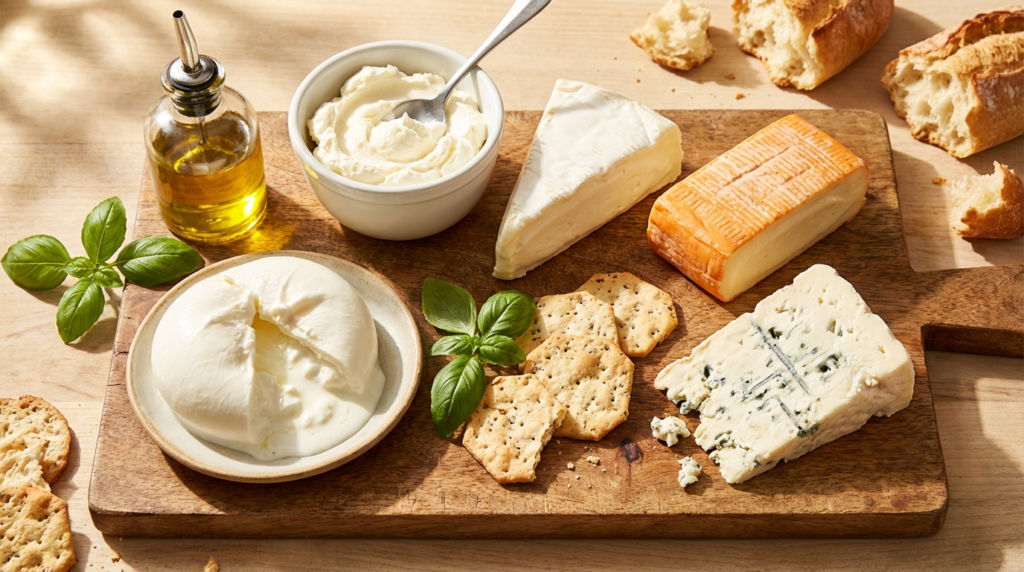
Five creamy Italian cheeses: Burrata, Mascarpone, Stracchino, Taleggio, and Gorgonzola Dolce
Direct Answer: How Italian Cheeses Become Creamy
Italian cheeses achieve their signature creaminess through three main methods:
- High Moisture Retention – Young cheeses that trap water and milk solids
- Acid-Set Processing – Creamy thickening without rennet’s solid protein bonds
- Proteolysis (Bacterial Breakdown) – Aging techniques that transform firm paste into oozing texture
Now, let’s explore each family in depth.
The “Fresh & Milky” Family: High Moisture Creams
These are creamy because they are young and retain water and milk, never developing a firm structure. Their freshness is their defining feature.
Burrata: The Cream-Filled Pouch
The Why: Burrata is a mozzarella shell filled with stracciatella—a mixture of fresh cream and shredded curds. Unlike solid mozzarella, the protein matrix inside remains liquid and delicate, creating that signature flowing center.
Key Attributes:
- Buttery, with a liquid center that spills when cut
- Best eaten fresh (within 24 hours)
- Delicate texture that collapses under heat
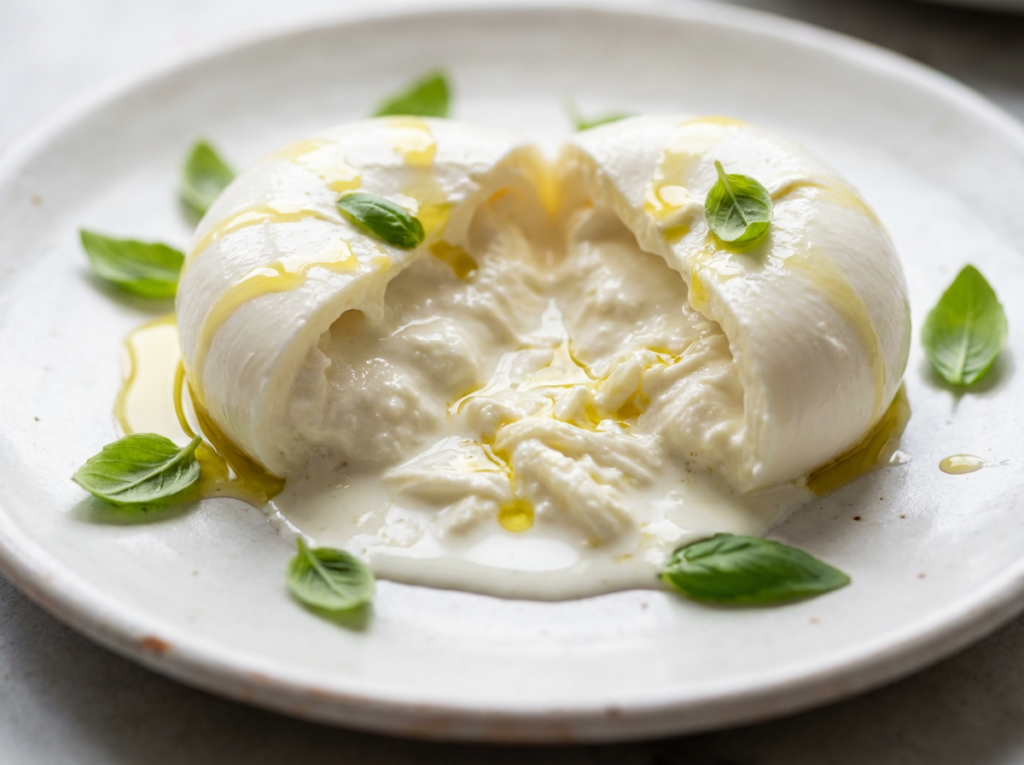
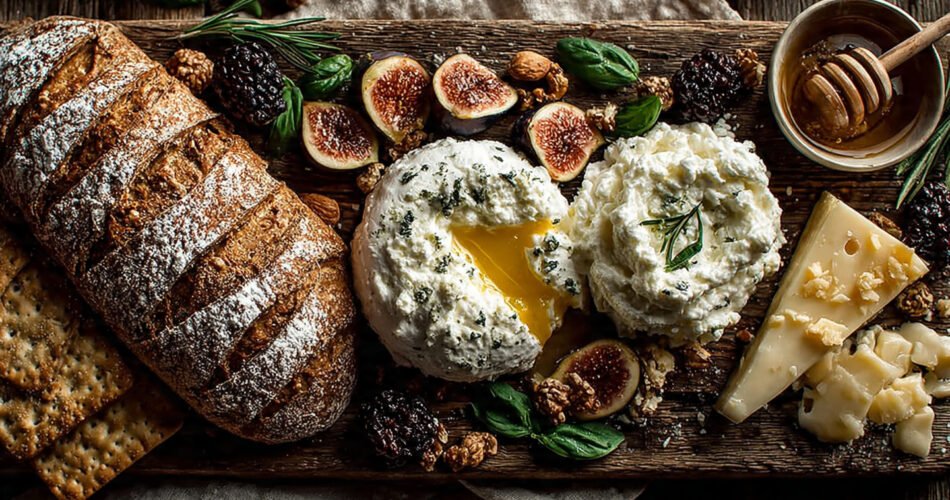
Burrata’s liquid center reveals shredded curds and cream
Best For: Topping pizza immediately after baking, elevating Caprese salads, or serving as a standalone appetizer with fresh bread.
Pro Tip (The “Melting Warning”): Never cook burrata directly into hot dishes. It separates into oil and water. Instead, add it fresh on top of warm food as a finishing touch.
Stracchino (Crescenza): The Tired Cow’s Gift
The Why: Stracchino comes from “stracca,” meaning “tired” in Lombardy dialect. Cows descending from Alpine summer pastures produced milk with exceptionally high butterfat content. Short aging means no rind develops—just pure, spreadable luxury.
Key Attributes:
- Tangy, yogurt-like flavor profile
- Spreadable texture that becomes “runny” at room temperature
- Pale white color with a wrinkled natural rind
Best For: Spreading thickly on focaccia, melting into piadina (Italian flatbread), or topping warm polenta.
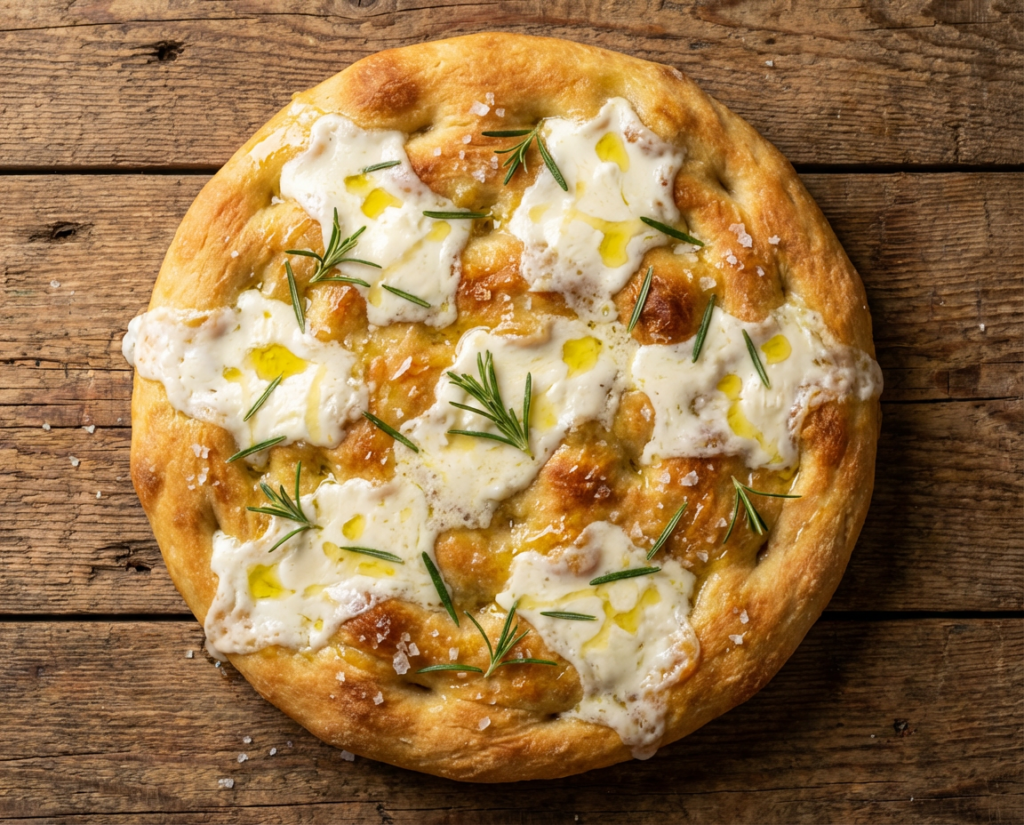
Stracchino spreads beautifully on warm focaccia.
Regional Secret: Stracchino is the hidden ingredient in “Focaccia di Recco,” a legendary Ligurian dish where paper-thin dough layers alternate with creamy cheese and local herbs—a must-try experience if you visit northern Italy.
The “Rich & Dense” Family: Acid-Set Creams
These are creamy because they are essentially thickened cream, not traditional rennet-set cheese. Acid replaces the rennet’s role, preventing tight protein bonds and maintaining silky texture.
Mascarpone: The Velvety Champion
The Why: Mascarpone is acid-set, not rennet-set. Citric acid thickens the cream while preventing the tight protein bonds that make other cheeses grainy. With 60–75% butterfat, it’s technically more cream than cheese—and that’s exactly why it’s so luxurious.
Key Attributes:
- Dense, velvety mouthfeel
- Slightly sweet, vanilla-like undertone
- Zero graininess; pure smoothness
Best For: The foundation of tiramisu, thickening risotto without splitting, replacing heavy cream in pasta sauces, or sweetening with honey for dessert.
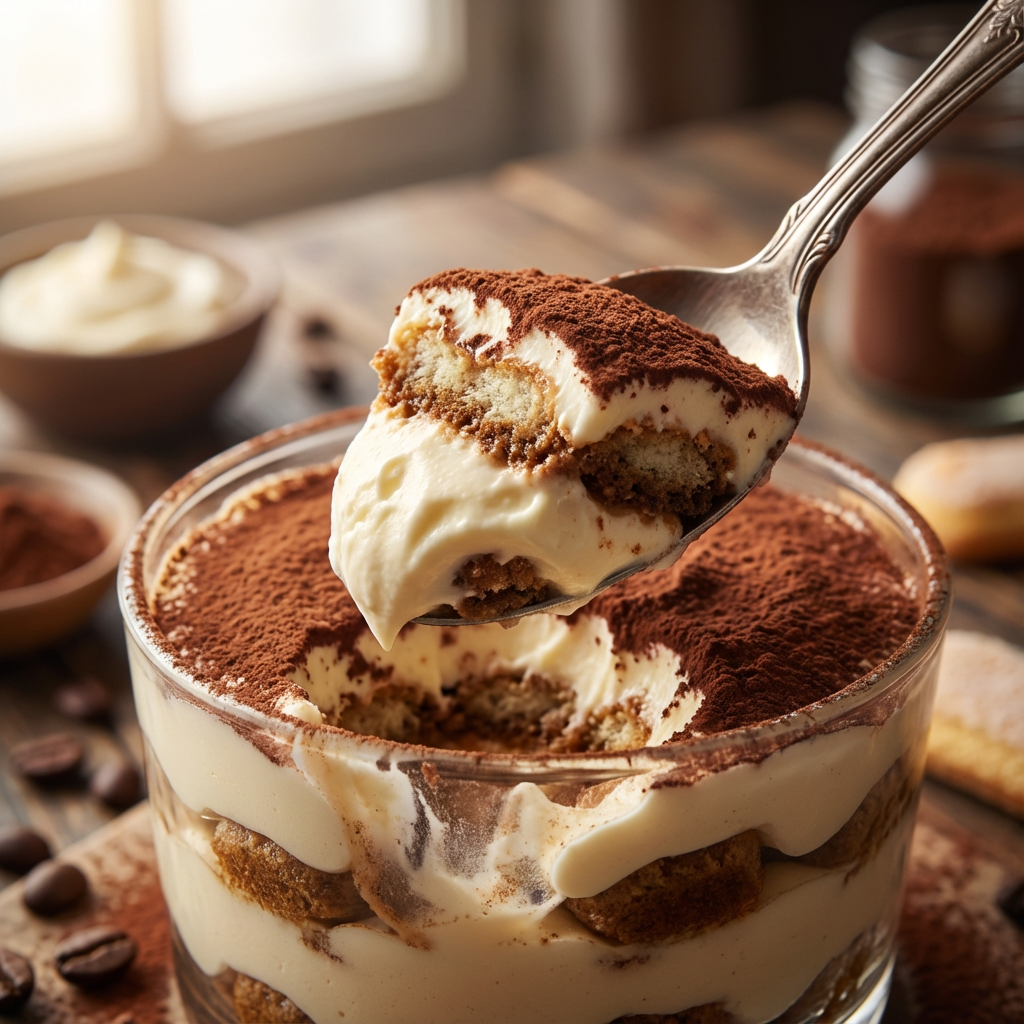
Mascarpone’s velvety texture is essential to tiramisu.
Ricotta: The Whey-Based Wonder
The Why: Unlike most cheeses made from casein (milk curds), ricotta is crafted from whey proteins—albumin and globulin. These proteins don’t fuse into hard blocks. High-cream ricotta becomes fluffy because the proteins remain loose and airy.
Key Attributes:
- Grainy but soft texture (smaller curds than cottage cheese)
- Light, airy, and slightly sweet
- Delicate flavor that plays well with both sweet and savory
Best For: Filling ravioli and cannelloni, lightening cheesecakes, or serving with fresh berries and honey.
The “Oozing Aged” Family: Proteolysis Magic
These are creamy because bacteria are actively breaking down the cheese from the outside in, transforming firm paste into a gooey, spoonable custard.
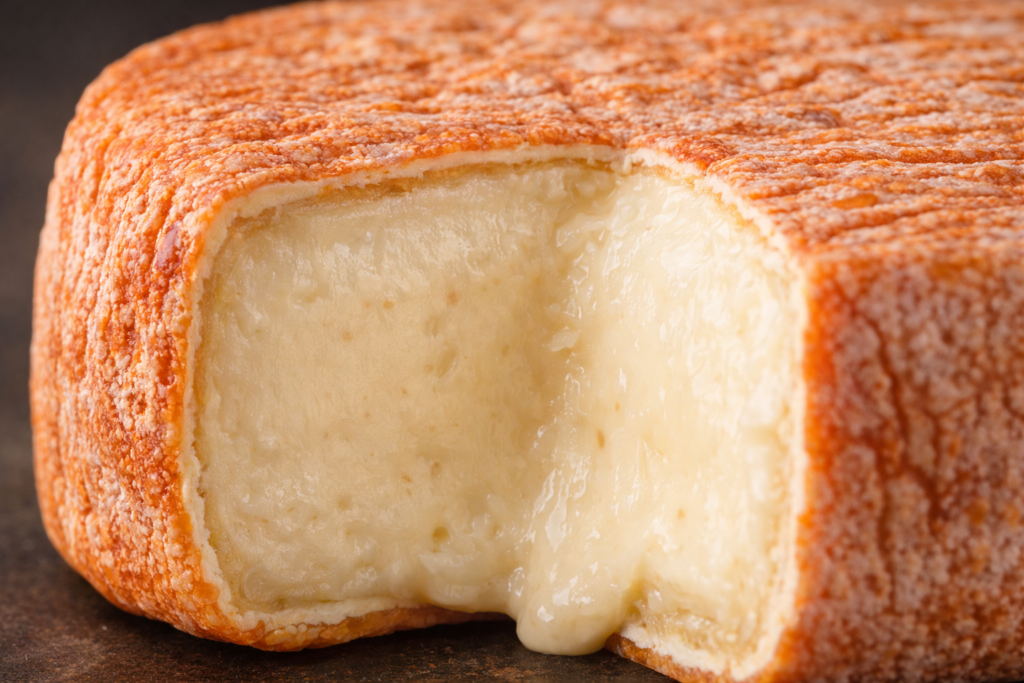
Taleggio: The Washed-Rind Wonder
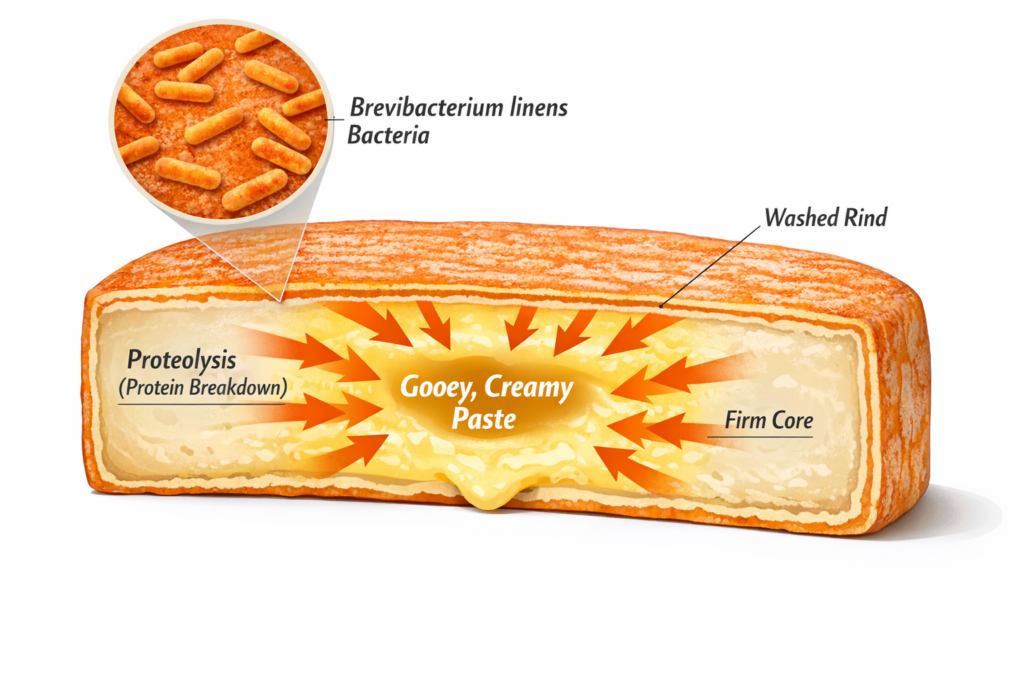
Bacteria on the rind break down cheese proteins inward
The Why: Taleggio is a “washed-rind” cheese. Throughout aging, cheesemakers brush the orange rind with bacteria (Brevibacterium linens) that break down cheese proteins in a process called proteolysis. This transforms the interior into gooey custard while keeping the rind orange and funky.
Key Attributes:
- Distinctive yeasty, funky aroma (don’t let this intimidate you!)
- Mild buttery flavor beneath the pungent nose
- Semi-soft, elastic texture that oozes when warm
Best For: Melting into creamy polenta, grilled cheese sandwiches with prosciutto, or serving on a cheese board at room temperature.
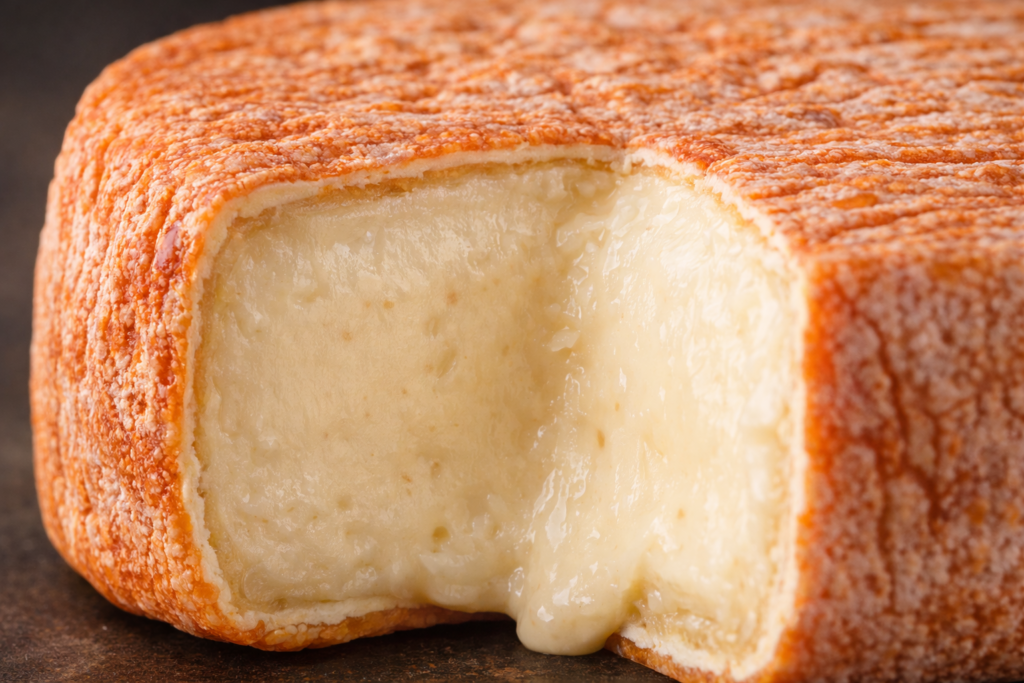
Taleggio’s distinctive orange rind indicates washed-rind aging
Gorgonzola Dolce: The Sweet Blue
The Why: Unlike Gorgonzola Piccante (aged 6+ months for crumbly texture), Dolce is aged only 50 days and retains higher moisture. The blue mold creates a creamy breakdown rather than a crumbly one, yielding a spoonable consistency.
Key Attributes:
- Spoonable at room temperature
- Sweet, mild flavor with subtle umami
- Light blue veins throughout pale paste
Best For: Spreading on crackers, drizzling melted over polenta, or crumbling into warm apple compote for dessert.
Pro Tip (The “Spoon Test”): If you can’t scoop Gorgonzola Dolce with a spoon, it’s too cold. Always serve at room temperature to experience true creaminess.
Gorgonzola Dolce should be soft enough to spoon at room temperature
Comparison Table: Melting vs. Spreading
| Cheese Name | Texture Type | Best Preparation | The “Science” |
|---|---|---|---|
| Burrata | Liquid / Fresh | Serve Cold/Room Temp | Cream-filled center stays liquid |
| Mascarpone | Dense / Spreadable | Desserts / Thickeners | Acid-set, high fat (60–75%) |
| Stracchino | Soft / Runny | Melted on Bread | High butterfat milk, short aging |
| Taleggio | Gooey / Elastic | Melted in Polenta | Washed-rind bacteria proteolysis |
| Gorgonzola Dolce | Soft / Spoonable | Spreading on Crackers | High moisture, short aging with blue mold |
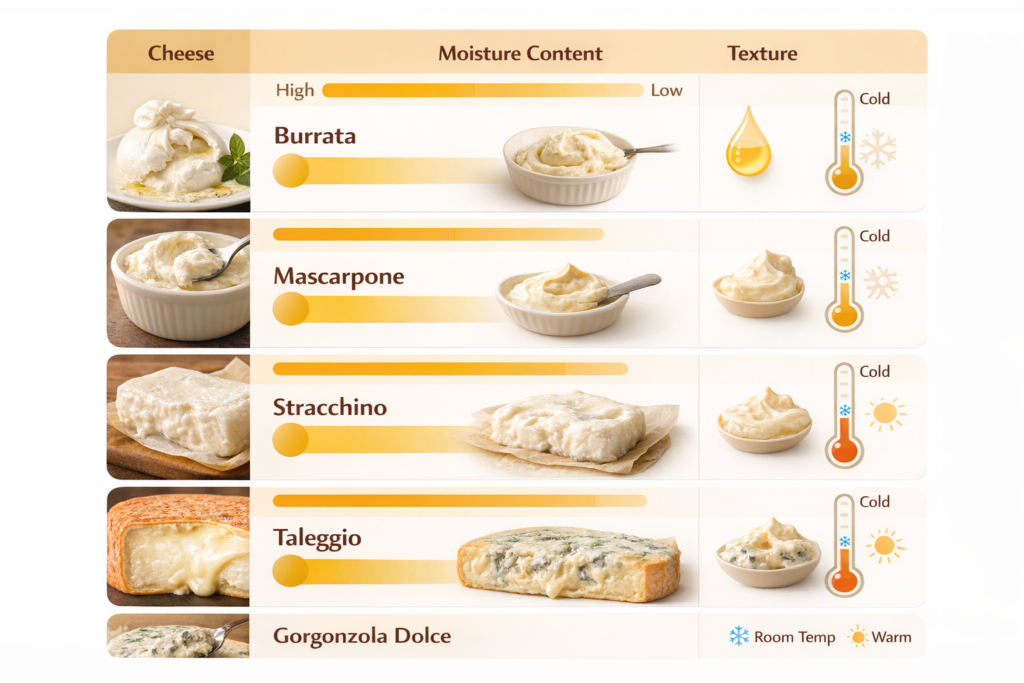
Comparing texture, moisture, and serving temperatures across creamy Italian cheeses
FAQ
Q: Why is my Italian cheese yellow inside?
A: High butterfat content combined with beta-carotene from grass-fed cattle turns cheeses like Taleggio and Stracchino a straw-yellow color. This natural pigment indicates rich, pasture-fed milk—a sign of superior quality and flavor.
Q: Can you eat the rind of creamy Italian cheese?
A: Yes for Taleggio and Robiola—the rind adds crunch and concentrated flavor. No for Gorgonzola (usually too salty and tough) or Mascarpone (it has no rind). Always check the label; some rinds are edible, while others are protective wrapping.
Q: What is the difference between Burrata and Mozzarella?
A: Mozzarella is a solid stretched curd with uniform texture throughout. Burrata is an artisanal pouch of mozzarella filled with stracciatella—fresh cream and shredded curds—creating that signature liquid center you break into when cut.
Q: Why does creamy Italian cheese sometimes separate or get oily?
A: Heat breaks the protein matrix holding fat and water together. Never overheat mascarpone or burrata. Add burrata cold to warm dishes. Gently warm aged cheeses like Taleggio in a low oven instead of direct flame.
The Italian Creaminess Factor: What Makes It Special
Italian cheesemakers didn’t invent creaminess by accident—they engineered it through generations of refinement. From the butterfat-rich milk of tired Alpine cows to the precise temperature control in modern creameries, every detail shapes texture.
When you bite into a truly creamy Italian cheese, you’re tasting centuries of tradition combined with scientific precision. Whether it’s the liquid center of burrata or the spoonable depths of gorgonzola dolce, these cheeses represent the pinnacle of dairy craftsmanship.
Explore More
Ready to go deeper? Discover how to build a perfect Italian cheese board, explore lesser-known creamy regional varieties, or learn the art of pairing Italian creamy cheese with wines and accompaniments.
The world of Italian cheese is vast, delicious, and endlessly rewarding.