The Ultimate Biltong Recipe: How to Make South Africa’s Famous Snack at Home
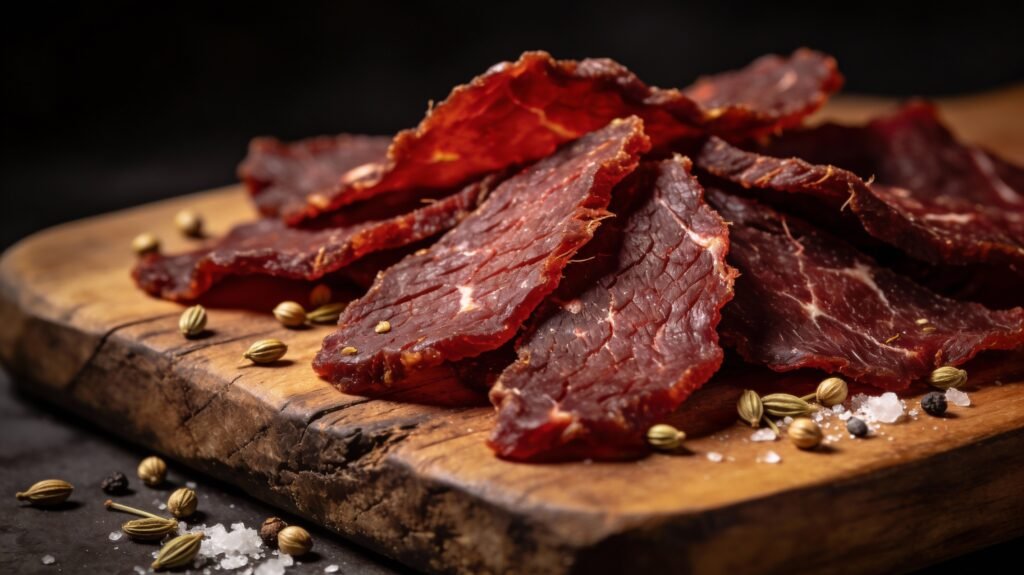
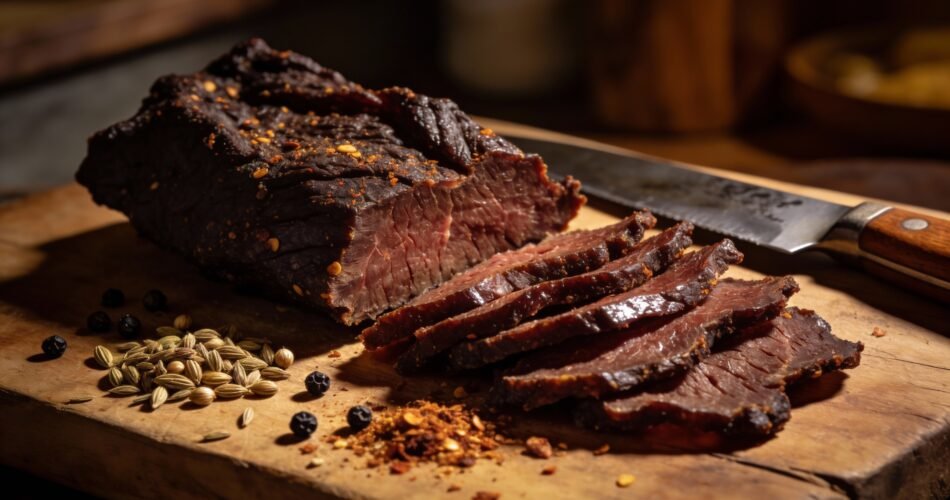
Homemade authentic Biltong: A high-protein snack better than any store-bought jerky.
You love savory snacks, but you’re tired of the sugary, over-processed beef jerky found in supermarkets.
It is expensive, the texture is often rubbery, and the flavor just lacks depth.
The solution is easier than you think: making your own. This authentic biltong recipe allows you to control the ingredients, save money, and enjoy a high-protein snack that tastes incredible.
What is Biltong?
Biltong is a traditional South African method of curing meat using vinegar and spices.
Unlike jerky, which is often smoked and cooked at low heat, biltong is air-dried without heat.
This process preserves the meat’s natural enzymes, resulting in a tender texture and a distinct savory flavor profile.
Choosing the Right Meat
The success of your batch depends entirely on the cut of meat you choose.
For the best results, look for high-quality beef from the hip or hind leg.
Top cuts include:
-
Silverside (most common)
-
Topside
-
Rump steak (for a deeper flavor with fat)
Ensure the meat is fresh and has a nice layer of fat if you prefer a moister texture.
Essential Ingredients for Your Biltong Recipe
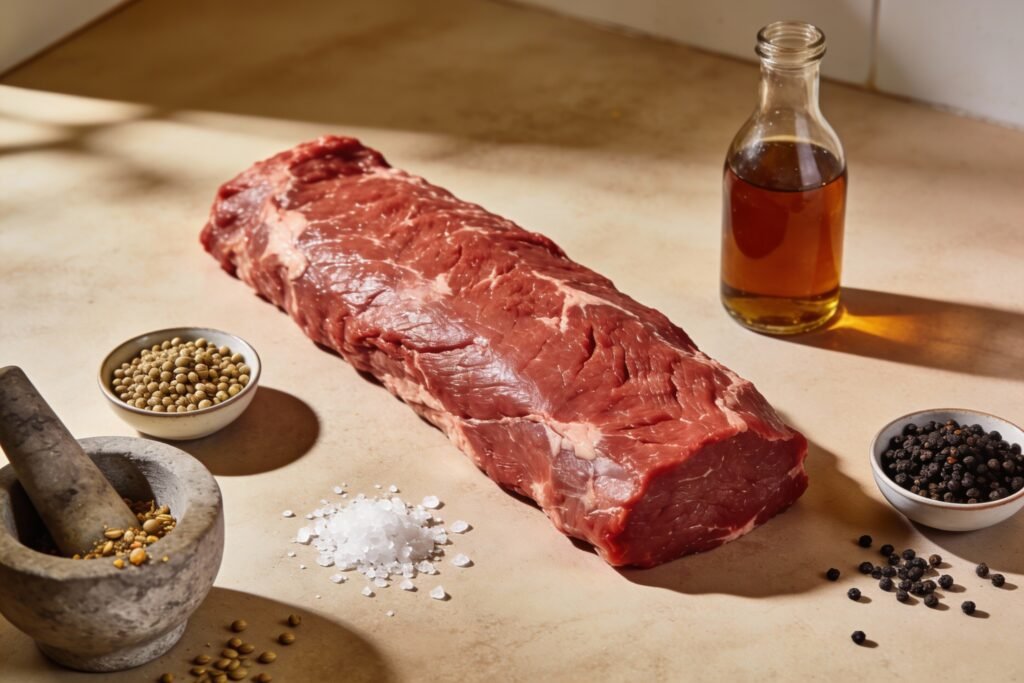
The holy trinity of Biltong: Coriander, Vinegar, and Salt.
To recreate the authentic taste, you need specific spices.
Simplicity is key here; do not overcomplicate the marinade with liquid smoke or soy sauce.
You will need:
-
Meat: 2kg (4.4 lbs) of Beef Silverside or Topside.
-
Vinegar: 100ml Brown Malt Vinegar or Apple Cider Vinegar.
-
Worcestershire Sauce: 50ml.
-
Coriander Seeds: 3 tablespoons (Whole, then toasted and crushed).
-
Black Peppercorns: 2 teaspoons (Coarsely ground).
-
Coarse Sea Salt: 1.5 cups (Use rock salt, not table salt).
-
Brown Sugar: 1 tablespoon (Optional, to balance the acidity).
-
Baking Soda: 1 teaspoon (Helps tenderize the meat).
Equipment You Will Need
You don’t need an industrial factory to make this work.
However, proper airflow is crucial to prevent mold and ensure even drying.
Basic Setup:
-
A sharp knife for slicing.
-
A large non-metal mixing bowl.
-
Plastic hooks or paper clips.
-
A Biltong Box (or a cool, dry area with a fan).
If you are exploring various biltong food recipes, you will find that a simple box with a lightbulb and computer fan works wonders.
Step-by-Step Homemade Biltong Recipe
Follow these steps carefully to ensure your meat cures safely and tastes delicious.
Step 1: Prep the Meat
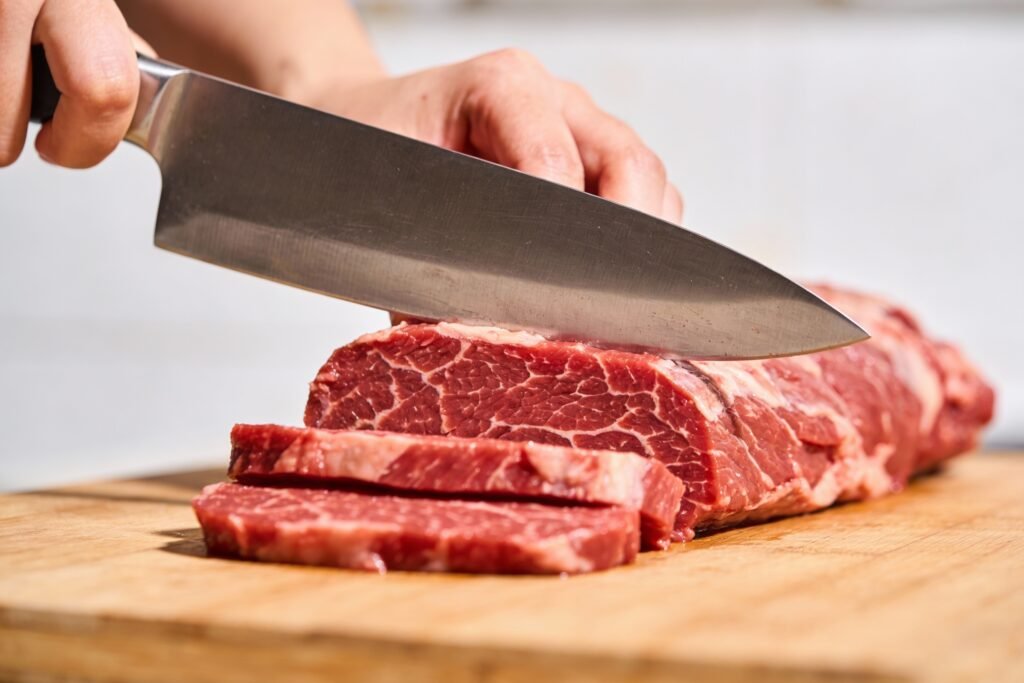
Cut the meat with the grain into uniform strips for even drying.
Trim off any hard gristle or excessive sinew, but leave the yellow fat. Slice the meat with the grain into strips about 2cm to 3cm thick. Keep the slices uniform so they dry at the same speed.
Step 2: Toast the Spices
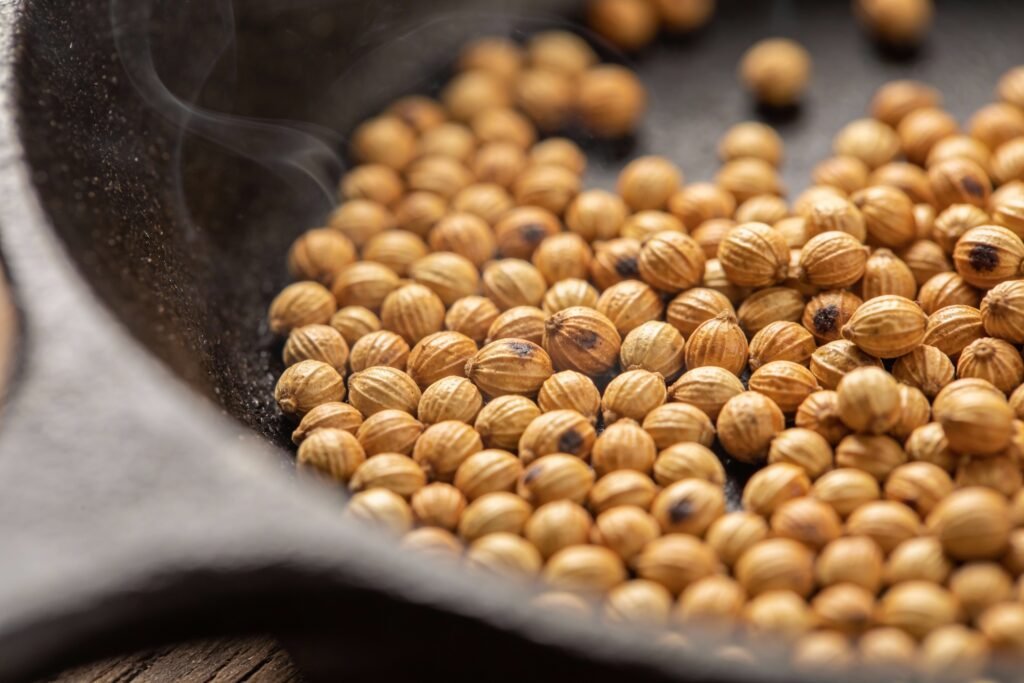
Toasting the coriander seeds releases their natural oils and aroma.
Place your whole coriander seeds in a dry pan over medium heat. Toast them until they become fragrant and start to pop slightly. Crush the coriander and peppercorns roughly in a pestle and mortar; do not grind them into a fine powder.
Step 3: Marinate
Mix the vinegar and Worcestershire sauce in a bowl. Rub the meat strips thoroughly with the vinegar mixture. In a separate bowl, mix the crushed spices, salt, sugar, and baking soda.
Step 4: Layer and Cure
Sprinkle a layer of the spice mix at the bottom of a wide container. Place a layer of meat on top, ensuring every inch is covered. Repeat the process until all meat is stacked and spiced. Cover and refrigerate for 4 to 12 hours, flipping the meat halfway through.
Step 5: Hang and Dry
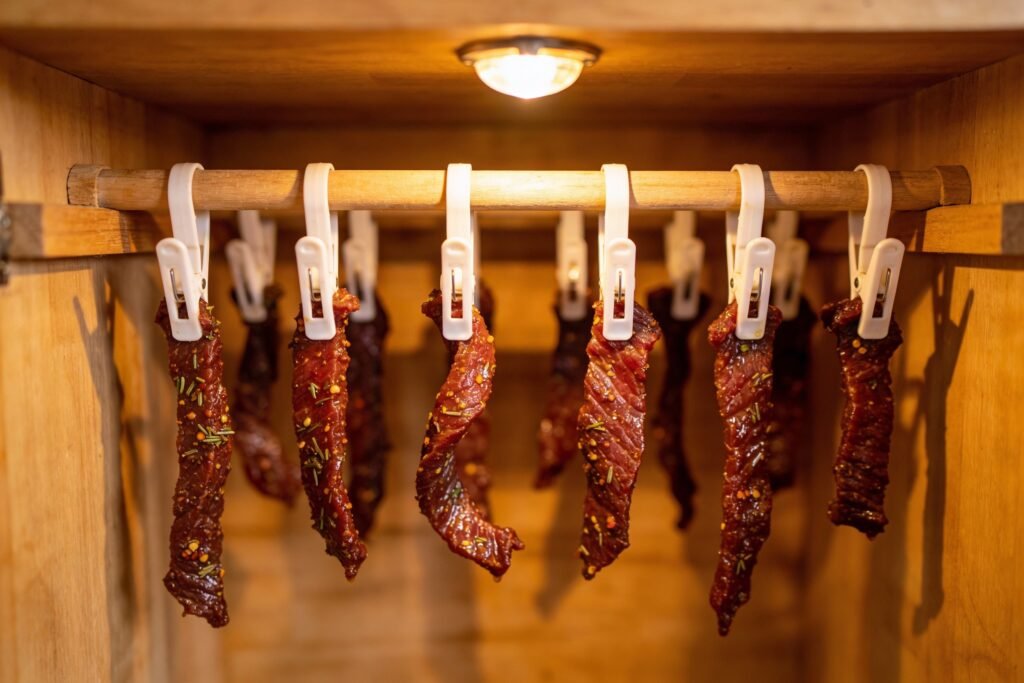
Hanging the strips with enough spacing is crucial for proper airflow and drying.
Remove the meat from the container. Do not rinse the spices off; shake off any excess liquid instead. Insert hooks into the thickest end of the strips. Hang the meat in your biltong box or a well-ventilated area.
Step 6: The Wait
Allow the meat to dry for 3 to 7 days. The time depends on humidity and how “wet” or “dry” you like your biltong. Squeeze the meat to test doneness; it should feel firm but have a little give in the center.
Pro Tips for Perfect Biltong
-
Hygiene is King: Always wash your hands and sterilize your hooks to prevent bad bacteria.
-
Airflow: Never let the pieces of meat touch each other while hanging.
-
Storage: Once dried, slice it up and store it in a paper bag in the fridge. Plastic bags can cause it to sweat and mold.
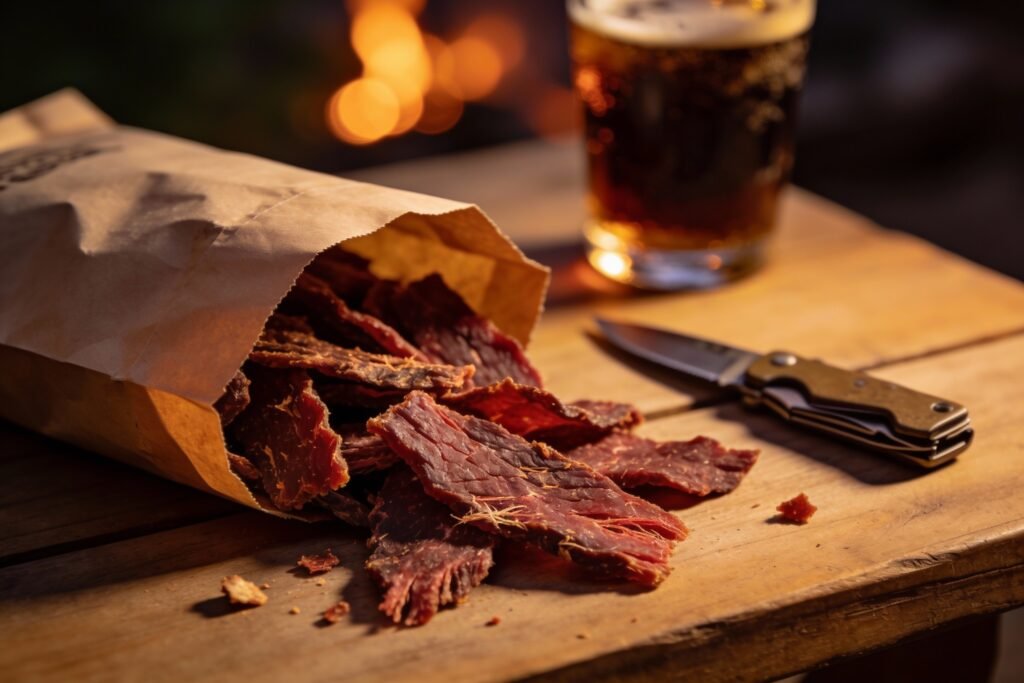
The perfect high-protein snack, ready to eat or store in a paper bag.
(FAQ)
Here are the answers to the most common questions regarding this biltong recipe.
1. What is the difference between Biltong and Beef Jerky?
The main difference is the drying process and ingredients. Jerky is often marinated in sugary sauces and smoked or cooked at low heat. Biltong is cured in vinegar and air-dried without heat, resulting in a softer, more cured meat texture.
2. How long does it take to make biltong?
The drying process typically takes between 3 to 7 days. This varies based on the thickness of your meat slices, the humidity of your environment, and your personal preference for “wet” (rare) or “dry” biltong.
3. Can I make biltong without a specialized box?
Yes, you can. You need a cool, dry room with good air circulation. You can hang the meat on a clothes horse and position a fan to blow air gently over the meat. Ensure the area is fly-proof to protect your batch.
Conclusion
Making your own cured meat is a rewarding experience that connects you with a rich culinary tradition.
Once you taste the difference between store-bought snacks and this authentic biltong recipe, you will never go back.
Gather your spices, visit your butcher, and start your first batch this weekend!