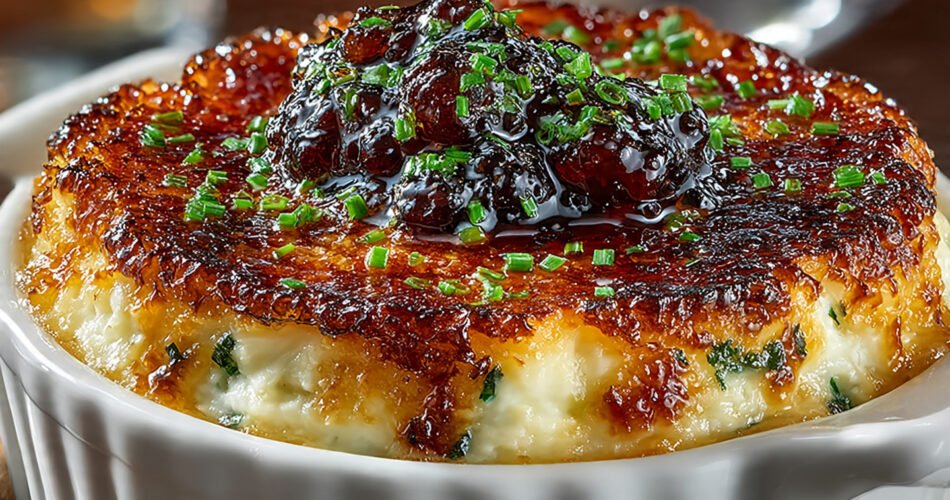
Crab brûlée is a savory twist on crème brûlée: a chilled crab-and-cream custard topped with a thin caramelized sugar crust you crack right before serving.
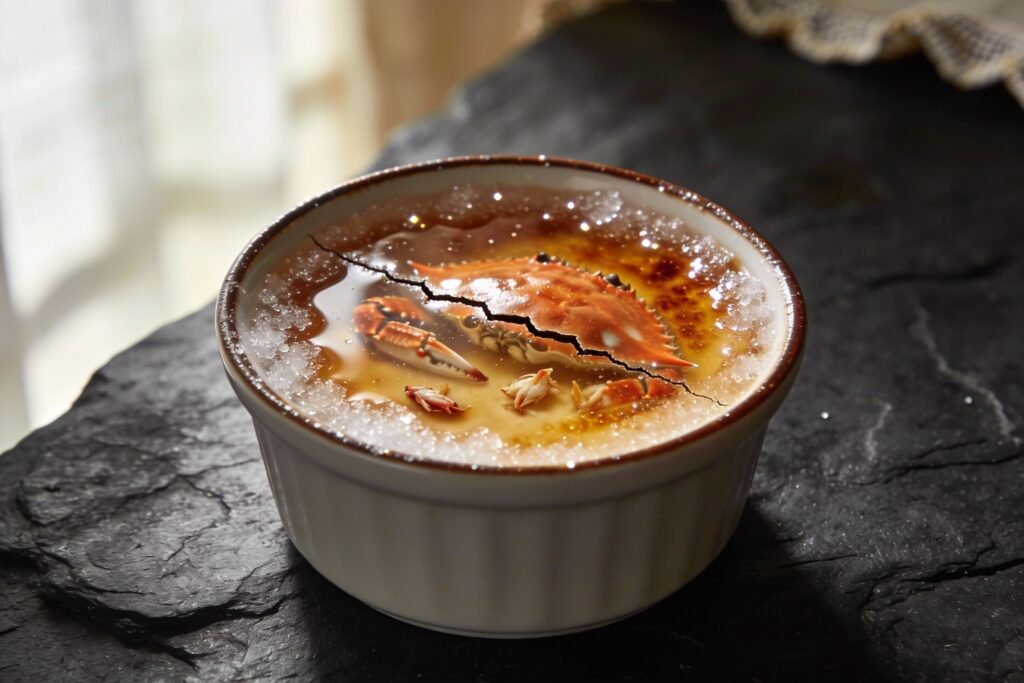
Savory crab brûlée with a glassy sugar crack
Why you’ll love this recipe
It’s quick to assemble, but it looks and eats like something from a white-tablecloth menu. The best part is the contrast: cool, silky custard under a hot, brittle sugar top.
Ingredients (with notes)
Crab meat
- Fresh crab gives the cleanest flavor, but canned or frozen can still work if drained well and picked over for shell bits.
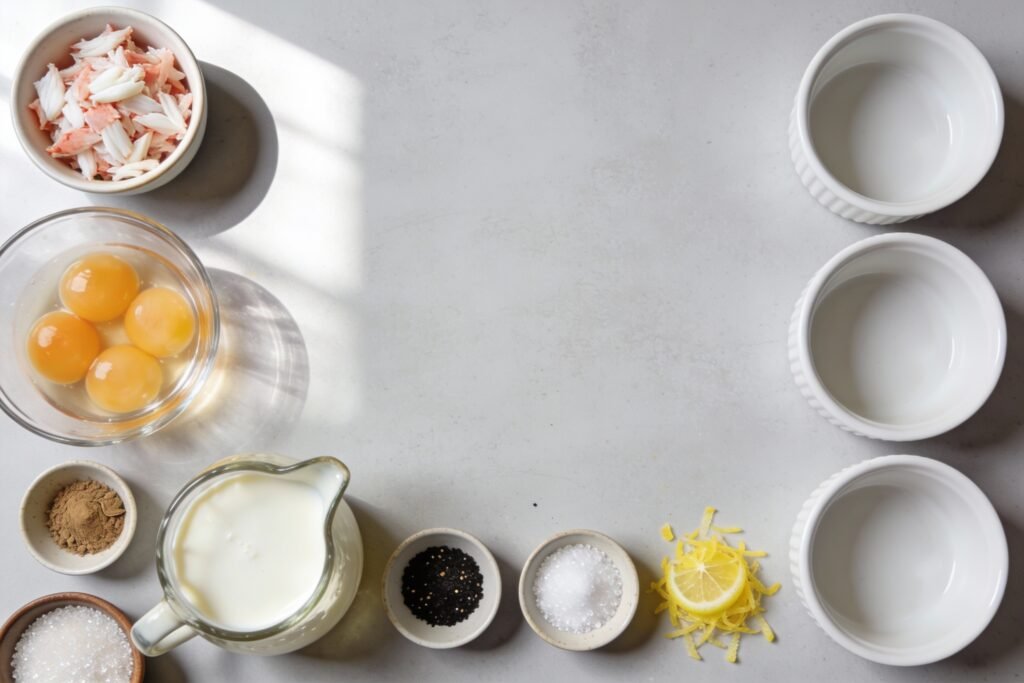
Crab, cream, yolks, and a little spiceready to turn savory
Egg yolks + heavy cream
- Egg yolks thicken the custard into that classic crème brûlée texture, while heavy cream keeps it rich and smooth.
Seasoning
- Salt and pepper keep it savory, and a small pinch of nutmeg adds warmth without making it taste “sweet.”
- Optional lemon zest adds brightness if you want a lighter finish.
Sugar for the brûléed top
- Use a thin, even layer so it melts fast and sets into a crisp, glassy sheet instead of a thick candy cap.
Equipment you’ll need
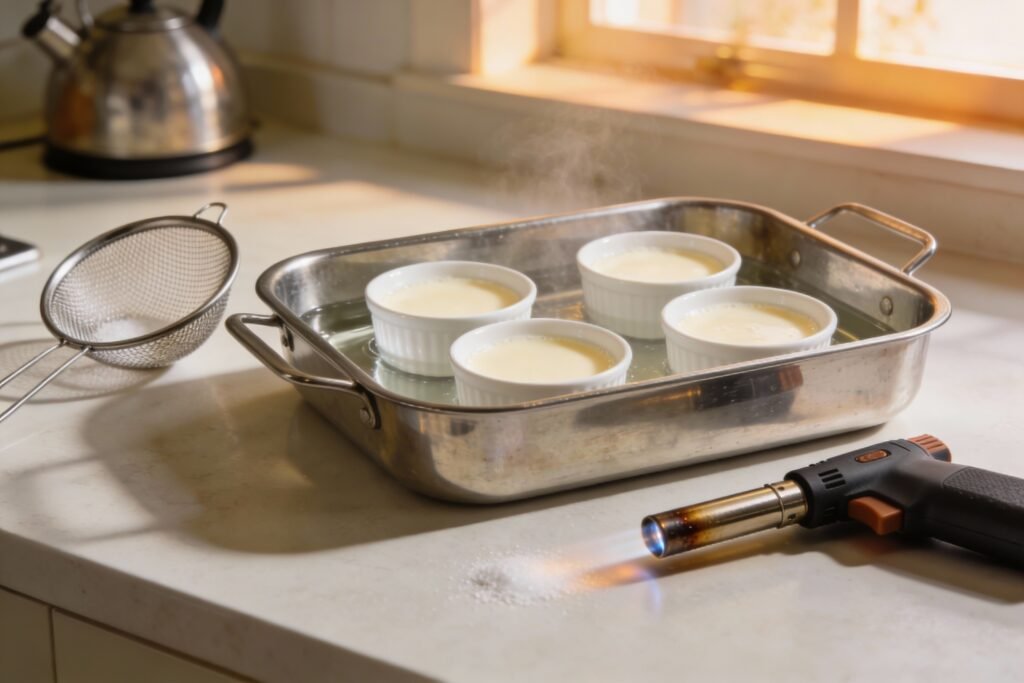
Ramekins, torch, and a water bath setup for a silky custard
- Ramekins and a deep baking dish or roasting pan for a bain-marie, which helps the custard bake gently and evenly.
- A fine strainer for a smoother custard base.
- A kitchen torch for the cleanest crust, with a broiler as a backup if needed.
Portioning (appetizer vs starter/main)
- Appetizer: Make 4 small ramekins, which keeps the dish rich but not heavy.
- Starter/main-ish: Use larger ramekins and serve with a sharp salad or toasted bread, then rely on doneness checks (a slight center wobble, not a firm set) rather than strict bake time since deeper custards can take longer.
Step-by-step crab brûlée
Prep
Preheat your oven to 160°C / 320°F so it has time to come fully up to temperature.
Pour the cream into a saucepan, warm it just to a gentle simmer, then season with salt, pepper, and nutmeg.
Temper the yolks (don’t scramble them)
Whisk the egg yolks in a heatproof bowl until smooth.
Slowly stream the warm cream into the yolks while whisking all the time, then whisk until the mixture is fully combined and even.
Strain for a silkier custard
Set a fine mesh strainer over a clean jug or bowl and pour the custard through it.
This catches any cooked egg bits and gives you a smoother, more restaurant-style set.
Fill ramekins
Scatter the crab meat into the bottoms of your ramekins and top with chopped herbs.
Pour the strained custard over the crab, leaving a little headspace at the top so it does not spill in the oven.
Bake in a water bath
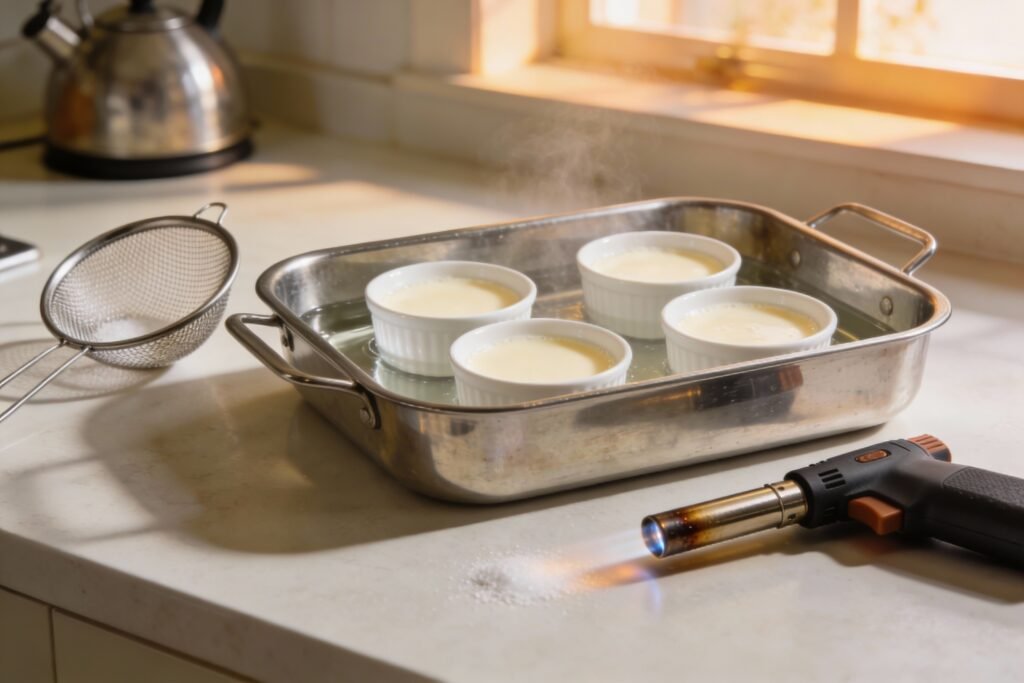
Custards baking low and slow in a gentle bain-marie
Set the filled ramekins in a deep baking dish or roasting pan.
Pour hot water into the pan until it reaches about halfway up the sides of the ramekins so the custard cooks gently and evenly in a bain-marie.
How to know it’s done
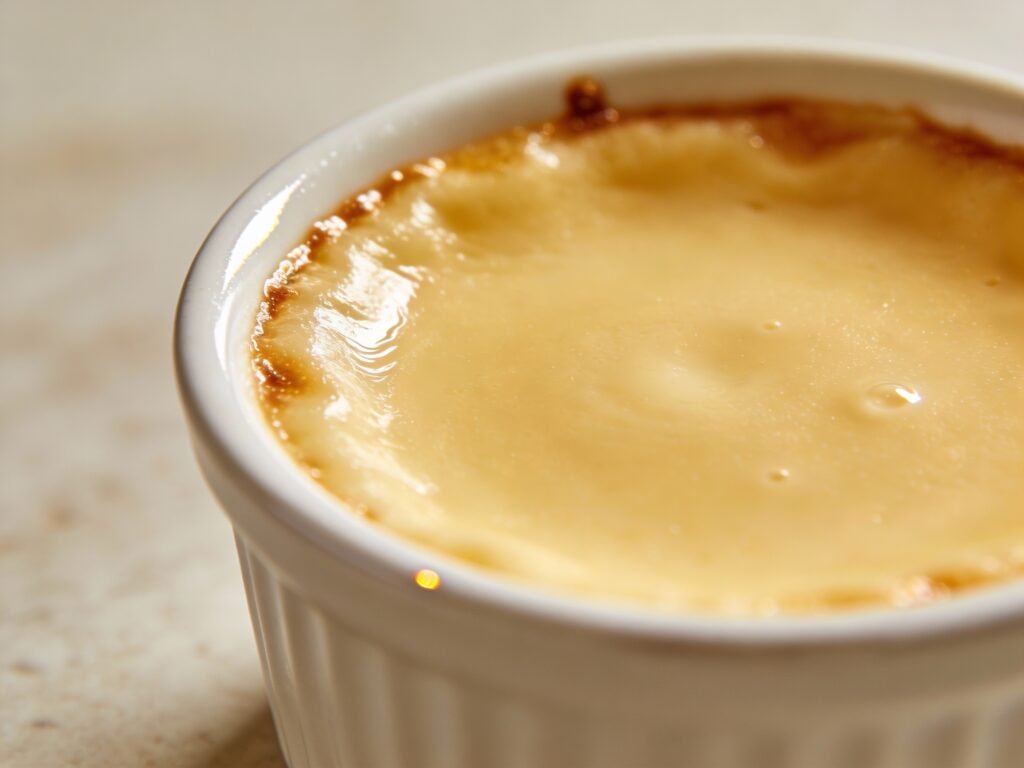
Set edges, soft centerthis is the custard sweet spot
Bake until the edges look set but the center still has a soft, slight wobble when you nudge the ramekin.
If you use a thermometer, aim for roughly 170–175°F (77–79°C) in the center for crème brûlée-style custards while keeping the texture smooth.
Chill
Take the ramekins out of the water bath, cool them to room temperature, then cover and refrigerate.
Chill at least 4 hours, or overnight if you can, for the best flavor and custard texture.
Brûlée the sugar (right before serving)
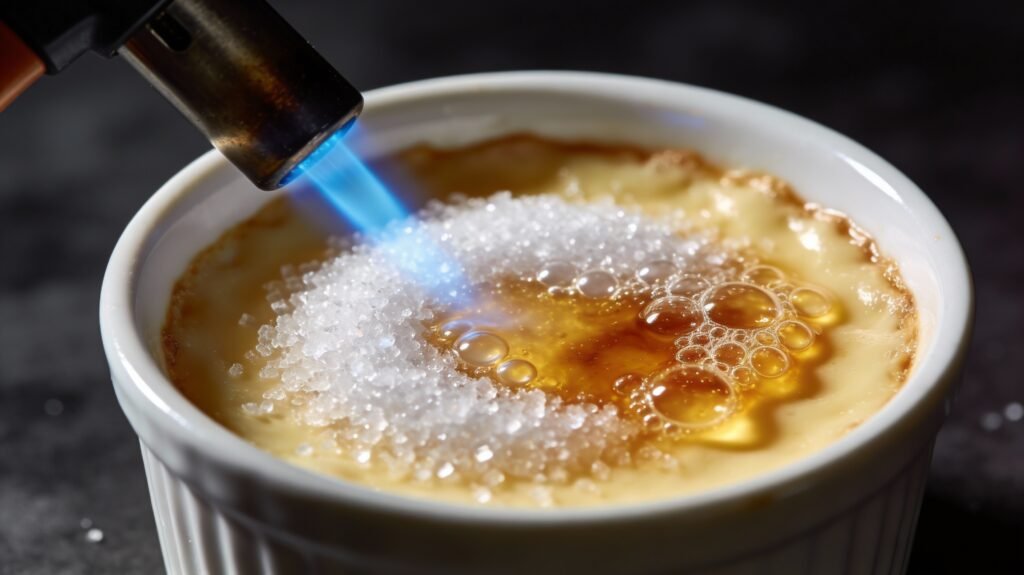
Torch, melt, caramelize. One thin layer, one clean crunch
Dry the surface first
When you are ready to serve, check the tops for moisture and gently blot away any condensation with a paper towel.
A dry surface helps the sugar melt and caramelize into a clean, glassy layer instead of turning patchy.
Torch method
Sprinkle about 1 teaspoon of granulated sugar in a thin, even layer over each chilled custard.
“font-weight: 400;”> Use a kitchen torch to melt and caramelize the sugar until it turns golden and crisp, then let it harden for a minute.
Broiler backup
If you do not have a torch, place the ramekins under a hot broiler, watching closely as the sugar melts and browns.
Broilers can heat the custard more unevenly than a torch, so keep the custards very cold and pull them out as soon as the top is caramelized.
The sugar crust will start to soften as it sits because it absorbs moisture from the custard, so brûlée as close to serving time as possible.
Food safety notes
For custards and other recipes with added liquid made from eggs, food safety guidance recommends cooking to at least 160°F (71°C) to destroy harmful bacteria.
Home cooks can rely on a thermometer for precise safety and doneness, or use visual cues like a set edge and gentle jiggle in the center if they do not have one.
Troubleshooting (common problems)
If the custard looks curdled, grainy, or full of bubbles, it likely heated too fast, so next time raise the water level, lower the oven temperature a bit, or pull it earlier when the center still jiggles.
If the custard will not set, extend the bake time, check that your oven is reaching the right temperature, and avoid stirring or shaking the custards as they cool.
If the sugar will not crisp or turns grainy, dry the tops better, use a thinner sugar layer, and keep the torch moving so the sugar melts and caramelizes instead of burning in spots.
Make-ahead, storage, and leftovers
You can bake the custards ahead, cool them, cover them, and store them in the fridge for a day or two before serving.
Wait to add and brûlée the sugar until the last minute, because the crust will soften in the fridge as it pulls in moisture from the custard.
Variations (optional flavor spins)
Stir in or garnish with herbs like chives, tarragon, or dill for a fresh, aromatic finish.
For more punch, season the custard with a little Old Bay, cayenne, or fold in a spoonful of finely grated parmesan for a salty, cheesy edge.
Recipe card (printable block)
-
- Yield: About 4 small ramekins (appetizer portions).
- Time: Around 20 minutes active time, 35–40 minutes baking, plus at least 4 hours chilling.
- Ingredients: Crab meat, egg yolks, heavy cream, salt, pepper, nutmeg, optional lemon zest, herbs, and granulated sugar for the top (list in cups, grams, and teaspoons for clarity).
- Steps: Warm and season cream, temper into yolks, strain, fill ramekins with crab and custard, bake in a water bath until just set, chill well, then brûlée sugar to a crisp top right before serving.
Target temperatures: Cook custard to at least 160°F (71°C) for safety, with an ideal center range around 170–175°F (77–79°C) for silky crème brûlée texture.
Optional social clip:
- Record a 10–15 second “Torching the sugar” clip (tight framing, audible crack moment) since the caramelized top is the most shareable visual payoff.
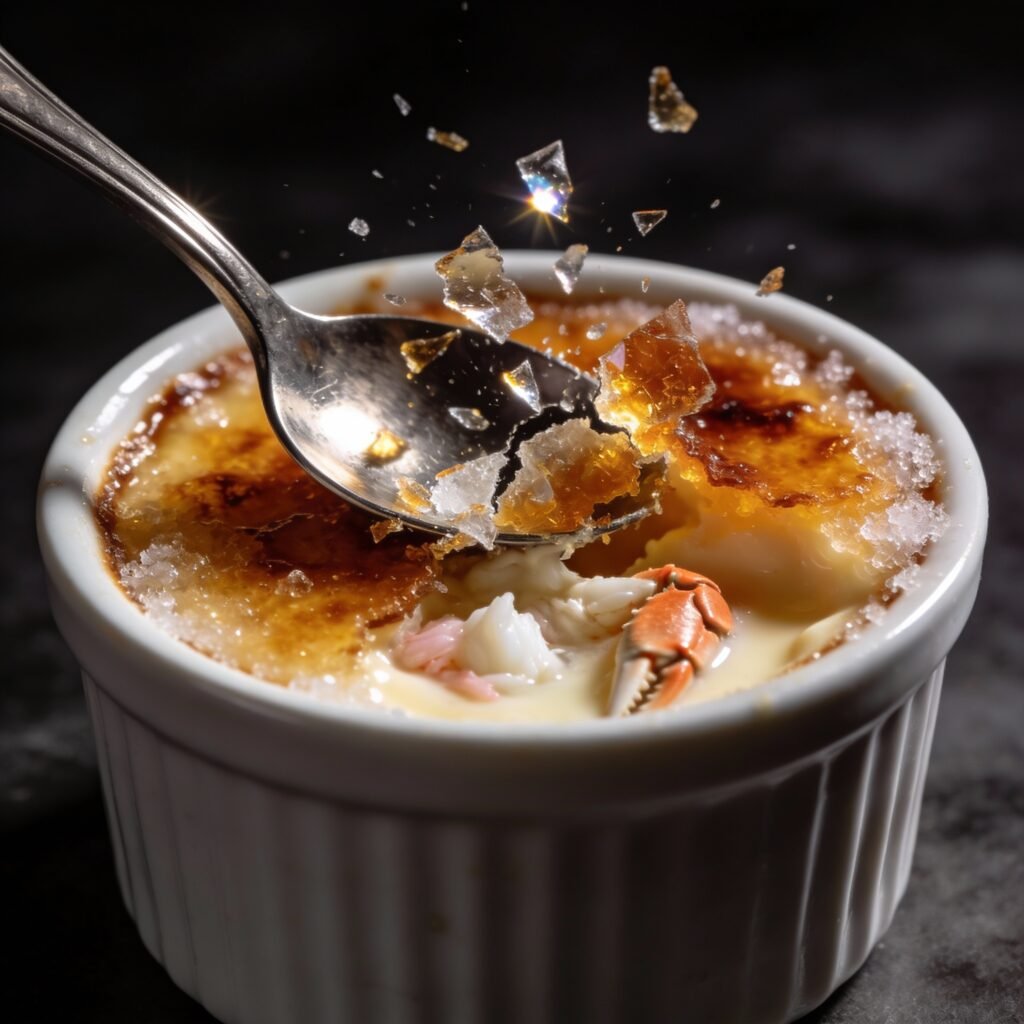
Shatter the top. Scoop the silk. Find the crab
FAQ
What is crab brûlée?
Crab brûlée is a savory crème brûlée made with a chilled crab-and-cream custard, finished with a thin caramelized sugar crust you crack right before serving.
Can I use canned crab meat for crab brûlée?
Yes. Canned crab meat works well for crab brûlée if it is drained well and picked through so shell bits do not ruin the custard texture.
Why do I need a water bath (bain-marie) for crab brûlée?
A water bath helps the custard bake gently and evenly, which lowers the risk of bubbles, curdling, and a grainy texture.
What internal temperature should crab brûlée reach?
For food safety, egg-based dishes should reach at least 160°F (71°C) at the center.
For a smooth crème brûlée style set, many cooks target about 170 to 175°F (77 to 79°C) in the center.
Can I make crab brûlée ahead of time?
Yes. Bake and chill the custards in advance, then add sugar and brûlée the top right before serving, since the crust softens as it sits.